It might be the exclusiveness of a single season that makes Drakesbad Guest Ranch so appealing. The ranch won't see its first visitors until June this year. And by the time these initial guests arrive, anyone thinking about reservations might look further ahead. Next summer already seems inviting.
The simple truth is that even if you do have reservations, things might change. The June 6 opening is contingent on weather. So is the October 13 closure. Some guests don't mind a conditional arrival because the stay makes everything worth it.
The lodge itself has only six rooms, each with a double bed plus a rollaway or twin bunk beds. Or you can stay in the cabin, annex, duplex, or bungalow (19 units total). The sizes and rates all very slightly, with the most noticeable difference being electricity. Most rooms do not have it. And you don't really need it.
The Drakesbad Guest Ranch takes you back in history.
Kerosene lamps light most rooms at night. It's part of the historic and environmentally-conscious rustic feel of the ranch. It also helps visitors take in the place as if it is from another time.
No, none of it is as rustic as the accommodations that Alexander Sifford set up in June 1900. When the ailing school teacher from Susanville first arrived on the site with his wife and son, the only one there to greet them was Edward Drake, owner of the famed soda waters of Drake's Spring.
The couple loved area so much that they bought Drake’s Hot Spring Valley from Drake outright. Eventually they renamed it Drakesbad (Drake's bath) and operated the ranch for two generations. The remote guest ranch became legendary with camping and meals for 50 cents, hot spring baths for 25 cents, and pasturing livestock a nickel a head.
Even after the 1916 Congress established the Lassen Volcanic National Park, the Sifford family stayed on as caretakers until finally selling the property to the government. Since, the National Park Service has leased it to various concessionaires. California Guest Services has held it for 36 years.
Inside Lassen Volcanic National Park.
The park itself is well known for its smoking fumaroles, wildflower meadows, mountain lakes, and volcanoes. Much of the park feels incredibly unexplored and undiscovered.
There are more than 150 miles of hiking trails that pass by active hydrothermal areas like the Sulphur Works and Bumpass Hell. There are several ranger-led programs and summer itineraries for guests. (There are winter activities too but the ranch remains closed.)
In addition to backpacking and hiking trail loops, there are dozens of educational adventure workshops, nature photography excursions, geological discoveries, and an amazing array of birding opportunities. Along with these park amenities, the ranch hosts a few of its own.
Several hikes (including the 90-minute walk to Boiling Spring Lake) can be taken right from the ranch. Swimming is even closer, with soothing hot mineral springs located a few steps from the cabins. There are several fishing areas in the park, and the ranch leads several fly-fishing excursions too. And, even more remarkable, the ranch is home to several of the most affordable horseback riding rates in the state, starting at $50 for a one-hour, self-guided tour to half- and full-days rides for $190.
As a real working ranch, you can make arrangements to bring your own. Boarding with feed is only $37.50 per day, about what it costs for overnight parking in some urban areas. And if that doesn't work out, then ask about archery and social starters.
Overall, this is an adventurous vacation for long hikes and horseback riding during the day and relaxation around a campfire at night. There are no room keys. And all meals are family style. Meals are included with the rates.
The Drakesbad Guest Ranch Ticks Off 9.2 On The Liquid Hip Richter Scale.
To niche to even be a tourist destination, Drakesbad Guest Ranch is one of those getaways you will talk about forever. While it might be too rustic for some people, those who thrive outside without always being wired up will love it.
Drakesbad Guest Ranch in California is located northeast of Chico, California, and northwest of Reno, Nevada. It is deep in the park, miles from any urban encroachment. You can place reservations directly with the ranch or visit top travel deals at Expedia.com for other excursions to northern California.
Showing posts with label California. Show all posts
Monday, February 24, 2014
Tuesday, December 17, 2013
Solvang Is A Danish Spin On California
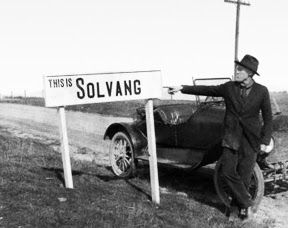
Anyone traveling across California along Highway 246 will likely find an unexpected sight (unless they go looking for it). Just a few hours northeast of Santa Barbara, breaking up the Santa Ynez Valley farmland, is a small Danish village complete with four Danish-styled windmills.
While the town didn't always look Danish, the earliest area settlers were. They city was founded in 1911 on almost 10,000 acres with the specific intent to establish a Danish colony far away from Midwestern winters. The Danish-inspired architecture would come later, shortly after World War II.
Initially, three Danish immigrants raised money to buy land and then subdivide it into plots for farms, homes, and a small town center. Profits from the land sale would build a Danish-style folk school and, later, a Lutheran church. Settlers, mostly Danish, answered the call to create this new colony. The hotel opened in July 1911. The rest was a matter of time.
Solvang started as a farm community before becoming a tourist destination.
After the opening of the hotel, other businesses followed — a general store, creamery, bakery, bank, and butcher. Most of them were built to support the growing number of farmers who moved there, especially as irrigation systems were quickly developed and the area's first school opened.
Like many Danish schools, it was a "school of life." That meant it offered a broad range of courses, which included Dutch arts and dual languages. Within two years, Attedag College became the heart of the community (until it closed in 1952).
While the college eventually closed, the spirit of the Danish people did not. When the college helped the township celebrate its 25th anniversary, it created what became a predecessor to Danish Days. And Danish Days would later help inspire the concept of creating a Danish village in California.
After Word War II, Ferdinand Sorensen from Nebraska was the first to build a møllebakken (Danish-styled home) and the first village windmill. His work was followed up by local architect Earl Petersen, who began to add facades to existing buildings in order to give them a Danish Provincial look. And once this authentic Danish atmosphere took hold, it continued to grow into a vibrant tourist destination.
A small collection of ideas add to the Solvang experience.
One of the most obvious reasons to visit Solvang is to experience the abundance of shops and galleries that line the town's Danish-themed streets. More than 150 independent shop owners populate the stores, with an emphasis on arts and antiques. There are plenty of treats and eats too.
The more historic and interesting stops include the Elverhoj Museum of History and Art. The museum, which was once the handcrafted dream home of artist and sculptor Viggo Brandt-Erichsen and his wife Martha Mott, was converted to accommodate permanent and visiting exhibits.
Along with that popular museum, the town is also home to a small but interesting Hans Christian Andersen Museum above The Book Loft. It includes many artifacts that encapsulate his life and work. Along with that collection, Solvang is home to the Old Mission Santa Ines (an old Spanish Mission), Wildling Art Museum (American wilderness collection), and Mendenhall Museum (memorabilia).
The Solvang Motorcycle Museum is a must see, with one of the largest collections of vintage motorcycles and rare European racing bikes in North America. The models range from a 1910 FN to other rare and modern machines, with an emphasis on racing cycles. The collection is owned by Virgil Elings, who has been collecting them for more than two decades.
While most people drive in from other cities, there are more than a dozen resorts, hotels, and inns in Solvang. The Hadsten House is an affordable favorite with an on-site mini-vineyard, day spa, and European-styled rooms with decorative fireplaces.
For those looking for a richer experience, the Alisal Guest Ranch is a 10,000-acre getaway for those who enjoy horseback riding, fly-fishing, golf and tennis. The resort provides access to the beautiful Alisal Lake.
Solvang, California Blanks 7.8 On The Liquid Hip Richter Scale.
Solvang requires ample planning to ensure the experience includes more than a shopping stroll. The area is a prime location for wine tours and scenic bike rides. While there are many activities year round, Solvang is best known for its Julefest in December and Danish Days every September.
While Solvang is a great place to stay when taking in the village, especially guests who visit during the town's seasonal outdoor theatrical schedule, don't discount the abundance of hotels throughout the Santa Ynez Valley. For details and booking information, start by comparing specials against top travel deals at Expedia.com. Many people plan day trips to the village, but there are more opportunities to explore for those who stay several days.
While the town didn't always look Danish, the earliest area settlers were. They city was founded in 1911 on almost 10,000 acres with the specific intent to establish a Danish colony far away from Midwestern winters. The Danish-inspired architecture would come later, shortly after World War II.
Initially, three Danish immigrants raised money to buy land and then subdivide it into plots for farms, homes, and a small town center. Profits from the land sale would build a Danish-style folk school and, later, a Lutheran church. Settlers, mostly Danish, answered the call to create this new colony. The hotel opened in July 1911. The rest was a matter of time.
Solvang started as a farm community before becoming a tourist destination.
After the opening of the hotel, other businesses followed — a general store, creamery, bakery, bank, and butcher. Most of them were built to support the growing number of farmers who moved there, especially as irrigation systems were quickly developed and the area's first school opened.
Like many Danish schools, it was a "school of life." That meant it offered a broad range of courses, which included Dutch arts and dual languages. Within two years, Attedag College became the heart of the community (until it closed in 1952).
While the college eventually closed, the spirit of the Danish people did not. When the college helped the township celebrate its 25th anniversary, it created what became a predecessor to Danish Days. And Danish Days would later help inspire the concept of creating a Danish village in California.
After Word War II, Ferdinand Sorensen from Nebraska was the first to build a møllebakken (Danish-styled home) and the first village windmill. His work was followed up by local architect Earl Petersen, who began to add facades to existing buildings in order to give them a Danish Provincial look. And once this authentic Danish atmosphere took hold, it continued to grow into a vibrant tourist destination.
A small collection of ideas add to the Solvang experience.
One of the most obvious reasons to visit Solvang is to experience the abundance of shops and galleries that line the town's Danish-themed streets. More than 150 independent shop owners populate the stores, with an emphasis on arts and antiques. There are plenty of treats and eats too.
The more historic and interesting stops include the Elverhoj Museum of History and Art. The museum, which was once the handcrafted dream home of artist and sculptor Viggo Brandt-Erichsen and his wife Martha Mott, was converted to accommodate permanent and visiting exhibits.
Along with that popular museum, the town is also home to a small but interesting Hans Christian Andersen Museum above The Book Loft. It includes many artifacts that encapsulate his life and work. Along with that collection, Solvang is home to the Old Mission Santa Ines (an old Spanish Mission), Wildling Art Museum (American wilderness collection), and Mendenhall Museum (memorabilia).
The Solvang Motorcycle Museum is a must see, with one of the largest collections of vintage motorcycles and rare European racing bikes in North America. The models range from a 1910 FN to other rare and modern machines, with an emphasis on racing cycles. The collection is owned by Virgil Elings, who has been collecting them for more than two decades.
While most people drive in from other cities, there are more than a dozen resorts, hotels, and inns in Solvang. The Hadsten House is an affordable favorite with an on-site mini-vineyard, day spa, and European-styled rooms with decorative fireplaces.
For those looking for a richer experience, the Alisal Guest Ranch is a 10,000-acre getaway for those who enjoy horseback riding, fly-fishing, golf and tennis. The resort provides access to the beautiful Alisal Lake.
Solvang, California Blanks 7.8 On The Liquid Hip Richter Scale.
Solvang requires ample planning to ensure the experience includes more than a shopping stroll. The area is a prime location for wine tours and scenic bike rides. While there are many activities year round, Solvang is best known for its Julefest in December and Danish Days every September.
While Solvang is a great place to stay when taking in the village, especially guests who visit during the town's seasonal outdoor theatrical schedule, don't discount the abundance of hotels throughout the Santa Ynez Valley. For details and booking information, start by comparing specials against top travel deals at Expedia.com. Many people plan day trips to the village, but there are more opportunities to explore for those who stay several days.
Labels:
California,
Places,
Rich Becker,
Solvang
Monday, July 22, 2013
Escapists Lured To Carmel-By-The-Sea
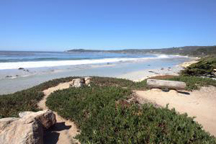
When the city buzz gets to be too much, a spontaneous drive up or down the California coastline can be the cure. Travel far enough north from Los Angeles (about 6 hours) or south from San Francisco (a mere two hours), and you'll eventually find an escape in one the most beautiful cities in America.
Carmel-by-the-Sea was amazing in its urban planning from the beginning. Even the city's master plan calls it "a village in a forest, overlooking a white sandy beach." Shortly after the turn of the century, the allure of its cultural scene became a magnet for artists, musicians, and writers.
George Stirling is one of the best known residents, as were Mary Austin, Ambrose Bierce, William Merritt Chase, Armin Hansen, Jack London, Xavier Martinez, and Upton Sinclair to name a few. London even wrote a book about the arts colony there: The Valley Of The Moon.
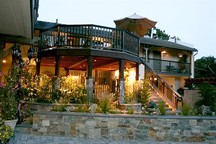
Carmel-by-the-Sea will leave you charmed as will the Coachman's Inn.
Carmel-by-the-Sea was amazing in its urban planning from the beginning. Even the city's master plan calls it "a village in a forest, overlooking a white sandy beach." Shortly after the turn of the century, the allure of its cultural scene became a magnet for artists, musicians, and writers.
George Stirling is one of the best known residents, as were Mary Austin, Ambrose Bierce, William Merritt Chase, Armin Hansen, Jack London, Xavier Martinez, and Upton Sinclair to name a few. London even wrote a book about the arts colony there: The Valley Of The Moon.
Carmel-by-the-Sea will leave you charmed as will the Coachman's Inn.
The Coachman's Inn is best described as something between a hotel and a bed and breakfast. The latest rounds of renovations are both spacious and romantic, with the property picking up elements of its 1950s past and Victorian floral accents.
I'm not normally down for this brand of elegance, but it fits the town's hodgepodge of English cottages. Carmel-by-the-Sea has a way of transporting to you someplace else entirely. It's the point.
What makes the Coachman's Inn work is that it's perfectly centered in the city, making it easy for you to walk the entire town or down to the beach. The parking is private too (but not guaranteed). And the staff is immediately friendly even if they seem more used to couples.
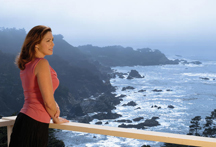
The beds are comfortable. A light continental breakfast (snack) is delivered in a basket to all 30 rooms. (Don't expect to pick up a room as a drop in.) It can easily be argued that there are better places, but this one carries a great value. If I was staying longer, Tickle Pink Inn is tempting for its views alone (below) even if you have to drive into town.
As a weekend getaway, there is plenty to help you unwind in Carmel.
In keeping with the escapist theme, plan to spend some time in Point Lobos State Natural Reserve. This is the famed landscape that artists came to paint and be inspired. I don't just mean painters. The Point Lobos Foundation has an entire section dedicated to the arts, ranging from pics to poetry about it.
The entrance to the park isn't free (and not always easy, with a one vehicle in, one vehicle out policy when it is at capacity), but it is worth it. You can find your own way or join the guided walks and tours inside the Whalers Cabin Museum.
While visiting Point Lobos is a must, there is plenty to see in town. There are more than 100 art and photo galleries in Carmel-by-the-Sea and a dozen wine tasting rooms too. Between the galleries and unique stores, it's easy to get lost in something as simple as a walk.
Some of it can be tourist-centic, but there are plenty of gems tucked away. The Carmel Art Associationis a good place to start. It has the longest history in supporting local artists, including the bigger names.
Other must-see attractions include the Robinson Jeffers Tor House (built with his own hands) and Celtic-inspired Hawk Tower, see what is playing at the Forest Theater Guild, and make sure you drop by The Forge In The Forest. As for other eats, Carmel-by-the-Sea boasts about 60 places to eat. One long-time favorite is Jack London's Bar & Grill. It's a little over rated, but fun nonetheless.
The Coachman's Inn Sparks 6.5 On The Liquid Hip Richter Scale.
The Coachman's Inn, on its own, lands solidly in the 6s on our scale (which is high), but Carmel would easily climb into the 9s on its own. While the inn is a nice place to retreat, it isn't necessarily a destination unto itself like some the other hotels that we've highlighted before. At the same time, Carmel-by-the-Sea is the kind of place that where you stay is almost secondary to the experience.
The nearest airport to Carmel is Monterey, Calif. Some travelers prefer to fly into San Francisco or San Jose, which are both international airports. Fore more details and booking information, start by comparing specials against top travel deals at Expedia.com. Consider price and how far you're willing to drive. For all of us who already call California home, the inspiration remains in our backyard.
Labels:
California,
Carmel,
Carmel By The Sea,
Justin Iger,
Places
Subscribe to:
Comments (Atom)