Showing posts with label Penguin. Show all posts

Friday, April 18, 2014

Daniel Suarez Uncovers The Influx

Influx by Daniel Suarez
The conspiracy behind the book is compelling. Maybe fusion power, genetic enhancements, and artificial intelligence have all been proven but kept hidden for the same reasons the federal government stepped in to save failing banks and auto manufacturers — disruption leads to chaos.

The premise almost feels right when framed by one of the most obvious discrepancies in scientific advancement. Are smart phones the most significant innovation since the moon landing?

The answer is most certainly not in Influx by Daniel Suarez. He envisions a world where cures for common disease, extended human life, and anti-gravity have all been discovered and then covertly covered up. The high tech society that seemed within reach in the sixties was purposefully scrapped.

Influx is a high wire adventure thriller for tech enthusiasts. 

Partly imagined and partly pulled more from science fact, Suarez tells the story of Jon Grady, a particle physicist who discovers a device that can reflect gravity. Even if the research takes years before it is applicable, the discovery will easily revolutionize physics and later everyday life.

Unfortunately for Grady, his discovery may never see the light of day. Almost as soon as the finding is verified, the Bureau of Technology Control (BTC) is quickly called to shut the project down and harvest everyone involved. The person who leads the extraction isn't a BTC regular but Richard Cotton, an anti-tech terrorist known for targeting small, innovative operations to prevent humankind from leaping ahead any further than the eighties.

Gravity
Although the Luddite coverup seems plausible enough, the bureau has a far less noble purpose than protecting faith. It originally began as a Cold War tactic to prevent invention from falling into the wrong hands but has since spiraled out of control to become a rogue quasi government agency that believes social order can only be preserved by eliminating social, political, environmental, and economic impacts.

Influx is part prison, part espionage, and all techno thriller.

Once captured by the BTC, geniuses are generally given one of two choices. They can become part of the shadow agency and perfect their technologies or they can resist and find themselves in a prisoner program more dehumanizing than any other ever conceived. The latter is the path Grady takes.

Much of the first half is dedicated to his time in one of the terrorizing prison systems. The back half pits him and a handful of ill-equipped protagonists who slowly become aware of the increasing threat behind the fabric of complacency. Even the heroine Alexa, a genetically enhanced woman who was raised by the BTC, is largely ignorant of the bureau's deepest and darkest secrets.

A few more graphs about author Daniel Suarez. 

Daniel Suarez
Suarez makes the premise plausible by creating a rogue agency out of the Cold War era and then giving it additional justification for existence in the wake of a new Cold War. Two equally rogue and well-established splinters of the agency exist behind other unknowing host governments.

This additional threat is never really exploited or tied up by the end, but it does tell us that Suarez likes to leave room for sequels. Loose ends and errors are often forgiven because Suarez always does an excellent job at drawing upon his background in developing mission-critical defense, finance, and entertainment software.

Interestingly enough, he was self-taught in software development before retiring to his first love of writing. Suarez originally graduated from the University of Delaware with a degree in English literature. Nowadays, he lives in Los Angeles and still enjoys console gaming, which grew out of his original love for pen and paper role-playing games.

Influx By Daniel Suarez Crosses Circuits At 4.8 On The Liquid Hip Richter Scale. 

The book is a page turner from the opening chapters and throughout, with the technological speculations (and philosophical questions) being the clear highlight. While immediately enjoyable, two-dimensional characters, cliche predictability, and several story loose threads reduce the novel to a popcorn book — a fun, fast read that will likely be more forgettable than the technology that ties everything together.

Influx by Daniel Suarez can be found on Amazon. The novel is also available from iBooks and as an audiobook from iTunes. It is narrated by Jeff Gurner who does a fine job adding another dimension to Grady and an especially adept presentation of the anti-hero Cotton.

Friday, February 7, 2014

Sue Monk Kidd Invents Some Wings

There has been significant buzz about The Invention Of Wings by Sue Monk Kidd. It is the story of two women, only one year apart in age, who find themselves bound together in the early 1800s.

The first is Hetty "Handful." She is an urban slave who lives on the wealthy Grimké estate in Charleston. The second is Sarah Grimké, who is the eighth of fourteen children that make up a prosperous plantation family in South Carolina.

The two of them are brought together on Sarah's eleventh birthday when Sarah is given ownership of the then 10-year-old Handful. Handful was born in slavery on the planation as the daughter of a talented seamstress. She is given to Sarah as a handmaid who will sleep in the hall outside Sarah's door and tend to every whim.

Sarah takes no joy in having her own slave. Her first thought is to set Handful free. When her mother threatens to reclaim Handful as her own and give her harsher duties, Sarah retracts her wishes and looks for other ways to defy her parents. She gives Handful uncommon liberties and secretly teaches her to read.

The Invention Of Wings is a caustic and claustrophobic imaging of history. 

Based in part on the real life story of Sarah Grimké, The Invention Of Wings chronicles the journey of an early abolitionist and feminist who emerged out of South Carolina. Handful is also based, in part, on a real slave that was given to Sarah.

Kidd notes that the real Handful did not survive childhood, but the author's ability to imagine what might have happened had the slave matured is plausible. In many ways, the real story of Sarah is even more extraordinary than the fictional story. It is reasonably well documented.

What Kidd does make clear is that Sarah becomes sensitive to the expectations and limitations placed on women as well as the morally reprehensible defense of slavery in America. In doing so, the author constructs a transposition of the two girls as they become women.

As Handful is afforded more liberties along her costly and tragic path toward freedom, Sarah increasingly becomes a prisoner of her own convictions. And all the while, Kidd purposefully explores the paradoxical position of slavery from varied perspectives.

From an individual point of view, she imagines that Sarah struggles to reconcile why additional liberties do not produce willful obedience and gratitude. On the societal scale, she details how slave owners make themselves prisoners to their way of life, always looking over their shoulders in fear of an uprising or convincing themselves that the pursuit of opulence must be matched by barbarism.

A couple of graphs about Sue Monk Kidd. 

After graduating from Texas Christina University with a degree in nursing, Kidd worked as a registered nurse and college instructor. While attending a writing class, she wrote a personal essay called Guideposts. It would eventually be reprinted by Reader's Digest.

Later, she would write her first novel. Since, The Secret Life Of Bees (2002) and The Mermaid Chair (2005) have both received critical acclaim and have also been adapted into screenplays. While she has published other books since then, The Invention Of Wings is her first substantial novel in years.

The Invention Of Wings Flies To 6.2 On The Liquid Hip Richter Scale. 

At the hands of Kidd, The Invention Of Wings is a remarkable story, told from the alternating perspectives of two distinct voices. If there are shortcomings, it is mostly the handling of a conclusion that reads less like it is racing toward a climatic resolution and more like a protracted postscript that fades into the background. By most accounts, the original is better than the book club version.

You can find The Invention of Wings: A Novel by Sue Monk Kidd on Amazon. You can also download the novel from iBooks or order a printed edition from Barnes & Noble. The audiobook is available from iTunes and is narrated by Jenna Lamia and Adepero Oduye. The two narrators add even more distinction to each woman's point of view.

Thursday, October 24, 2013

Khoury Casts Long Rasputin's Shadow

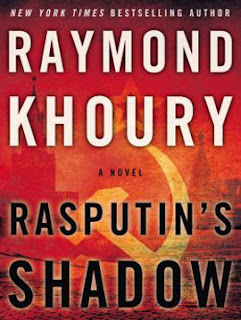
Rasputin's Shadow
Grigori Rasputin was neither a monk nor a saint, but even the Orthodox Church held him in high regard as a pilgrim. Aside from his knowledge and ability to explain the Bible in simple terms, he was well regarded by his followers as a psychic and faith healer.

It was these very powers that eventually led Nicholas II and Alexandra Feodorovna to invite Rasputin to the royal palace. They hoped he could heal the hemophilia that afflicted their only son. From that point forward, Rasputin's influence grew to include the whole of the Russian monarchy.

Was this influence divinely inspired, darkly mystical, or a rouse made possible with a technological breakthrough of sorts? The world may never know. After his brutal murder, Rasputin became immediately enigmatic in that history cast him as everything from righteous minister to madman.

What if the power to beguile could be bundled for the modern era.

Rasputin's Shadow cleverly casts itself across an entire century as Russian agents in the present day seek to detain Leo Sokolov in New York City. They want to find him because he has a secret. He almost wants to be found because they already have his wife.

It seems the retired physics teacher from Russia has rediscovered something from the past, a remnant from his father who once followed Rasputin and understood at least some of the mysterious man's secrets. Now amplified for the modern world, Sokolov wishes he could undo his decision to pursue it again.

RasputinAs a weapon, his breakthrough will never be safe in the hands of anyone. The last time it was used on a grand scale, an entire mining operation became a death camp as the miners began to inexplicably kill each other to the last man. The scene was so horrific, it left the perpetrators stunned before blowing up the entire camp in an effort to hide the evidence.

A threat from the past reappears in New York. 

FBI agent Sean Reilly, still reeling from the effects of his son being brainwashed by a CIA mind control spook, stumbles onto the case after being dispatched to a suicide. Except the man, a Russian embassy attaché, never jumped out of a fourth-floor window in Queens.

This one call quickly puts Reilly on a collision course with international implications. As what originally appears to be a Russian conflict with American agents and law enforcement caught in the middle becomes a threat to national security, Reilly must find out who is behind it and how to stop it.

A few graphs about author Raymond Khoury. 

Raymond Khoury
After he was born in Beirut, Raymond Khoury and his parents emigrated to America after the outbreak of the civil war. He was only 14. Later, he would return to attend a university and study architecture. When the civil war broke out a few weeks after he graduated, he was luckily evacuated by the Marine Corps.

He landed in London and joined an architecture practice that led to investment banking. It wasn't until much later that he would write The Maid Of Buttermere (adapted from Melvyn Bragg's novel) and then The Last Templar as screenplays. After a stint as a television series writer, he turned to novels.

Rasputin's Shadow is a briskly paced thriller, split between Rasputin's time and the present day. The end of the Cold War also plays a prominent role in the storyline as Khoury frames up post-communist Russia as a relatively bleak trade from bad to worse.

Rasputin's Shadow By Raymond Khoury Covers 4.1 On The Liquid Hip Richter Scale. 

The story is sharp and the pacing brisk, but the craft feels off at times. Some of this can be attributed to the past-present arrangement and switch from third to first person perspectives. When Rasputin's Shadow works, it is as a fictionalized historical thriller, with the thriller being mostly confined to the present.

Rasputin's Shadow by Raymond Koury is available on Amazon. You can also download the book for iTunes or find the novel at Barnes & Noble. The audiobook is narrated by Richard Ferrone, who does a particularly good job as Reilly, who dominates the last third of the book.

Friday, July 12, 2013

DiSclafani Rides With Girls At Camp

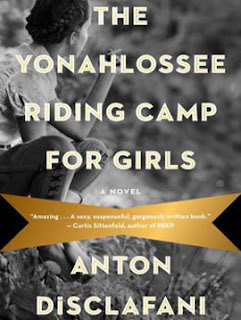
The Yonahlossee Riding Camp For Girls by Anton DiSclafani
It is the easiest thing in the world to dismiss The Yonahlossee Riding Camp For Girls by Anton DiSclafani as a quiet story about fast girls in the 30s. As a careless summation, that is what the book is about.

But then again, there are other things lurking beneath such safe or easy descriptions. Thea Atwell, after all, comes as close to being a passive aggressive anti-protagonist as any character has hoped to be since Gene Forrester pushed his best friend out of a tree.

Only she never makes us feel uneasy over the brute force of her actions. She was born to make us feel uncomfortable because we realize how unliberated we still want young women to be. We want them to be well-mannered, innocent and proper. If they are not, then let them be victims of men and circumstance.

Few protagonists will haunt you. This one will.

The Yonahlossee Riding Camp For Girls is everything it is because of precisely the reason critics temper their praise for the lovely and talented but equally uncertain and self-conscious Thea Atwell. It stands to reason that many will be miffed. Atwell earns sympathy early as she is torn away from home.

The book opens with her father doing the unthinkable. He is exiling his daughter to the Yonahlossee Riding Camp For Girls, presumably for something she did wrong. It's her punishment to be uprooted from an otherwise sheltered existence in Florida where her father's medical practice and her mother's inherited orange groves have afforded her a quiet and privileged life with her twin brother.

The Yonahlossee Riding Camp For Girls by Anton DiSclafani
The punishment, as readers might assume from Atwell's point of view, doesn't fit the crime. She is being taken from the freedom and safety of an estate and cast into a regimented mountain camp filled with wealthy and affluent girls, most of whom were sent there to learn etiquette and social grace.

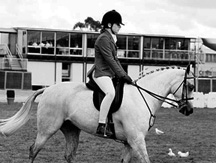
The only redeeming quality of the school from her point of view is that it includes riding lessons. Atewell is an especially good rider, not because she is the most skilled but because she is fearless. And it is this fearlessness in this coming of age story that depicts the dark side of adolescence that risks betraying everyone close to her — even the reader.

An era brought to life with both vivid and direct writing.

Anton DiSclafani easily proves her craft as a writer, effortlessly capturing the era and surroundings to make the novel both beautiful and compelling. If there are any risks in losing readers, it will likely be that the passive aggressive plot line proves too tiring, the sexuality too direct and passionless, or the protagonist too cruel, selfish, and unstable.

All of these assessments are grounded in some accuracy, but where the split between one reader and another occurs is that some will recognize all those things are important. Atwell is not Moraine in Out Of The Easy. You do not have to like her. She doesn't need you to like her. She rightly fits the times.

While the story is set in the midst of the Great Depression, DiSclafani and her young protagonist seem all too aware that the roaring 20s gave women a taste of independence. And this story makes the case that they needed more of it, as the virtues of men and old family wealth was to fickle to protect them.

DiSclafaniThroughout the story, it seems clear enough that society wants the young women of the Yonahlossee Riding Camp For Girls to rise to a specific standard, but some of them are becoming chiefly aware that those who expect this standard haven't necessarily risen to it. As fortunes are lost and families suddenly downcast, more girls than Atwell are learning that the horse show isn't confined to a course.

DiSclafani has a knack for writing. She rode horses and competed nationally. She also studied at Emory University and earned an MFA from Washington University, where she currently teaches creative writing. She lives in St. Louis.

The Yonahlossee Riding Camp For Girls Rides 7.2 On The Liquid Hip Richter Scale. 

For much the same reason I have yet to add A Separate Peace by John Knowles to the bookshelf, it's difficult to elevate The Yonahlossee Riding Camp For Girls. There is an importance to the work (though not as strikingly so as that of Knowles) but both are nearly lost on likability. It's a must read, but for a different reason than most novels.

The Yonahlossee Riding Camp for Girls: A Novel by Anton DiSclafani is available from Amazon. You can also order the novel from Barnes & Noble or download it for iBooks. The audiobook, narrated by Adina Verson, is perfectly balanced, making Atwell a girl you love and loathe at the same time. For more about DiSclafani, visit her Facebook page.

Thursday, June 6, 2013

Out Of The Easy Is A Spring Sleeper

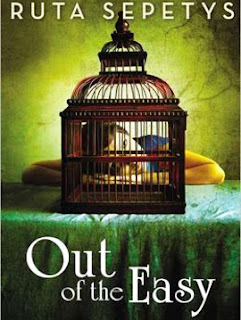
Out Of The EasyOut Of The Easy gives more than a lift to Josie Moraine, the protagonist of a deceptively straightforward and wildly engrossing historical fiction set in the 1950s. It gives readers a lift too as an amiable heroine attempts to break the chains of circumstance in New Orleans.

Although Moraine is a little rough around the edges after being raised in the seediest side of the French Quarter, she is smart and resourceful. She holds down two jobs as she approaches her eighteenth birthday — one at an author-owned bookstore and another at the brothel where her mother works.

It's in these two different environments that Moraine often foreshadows her future. She sees her life unfolding with an education like author Charlie Marlowe or without one like her mother, who entertains gentlemen at a house owned by madame Willie Woodley. It would all make perfect sense, except neither path is precisely as it seems to be nor necessarily exclusive of one another.

“Sometimes we set off down a road thinkin' we're goin' one place and we end up another. But that's okay. The important thing is to start.” — from Out Of The Easy

Josie Moraine sees her chance clearly enough. She has her sights set on school in New England, a college that is less likely to discriminate against or discourage degrees with a domestic bent. But to make it happen, there are plenty of roadblocks for Moraine to overcome.

New Orleans, 1950sThe first and most obvious is that being accepted in proper circles is difficult without the right pedigree. As Woodley once laid out: Salted peanuts don't mix with petits fours. And Moraine is salted peanuts.

Not only was Moraine's mother a prostitute, but she was also named after the most successful madame that her mother had ever met. The reason didn't help either. Her mother wished that life on Moraine too.

If that wasn't enough, Moraine has other challenges. She doesn't really know anyone who could write her letters of recommendation. She never had time to partake in extracurricular activities. She had no idea how to finance her education.

But even if she could remedy these two problems, another problem surfaces. A gentleman visits the bookstore on New Year’s Eve and purchases a volume of Keats for his wife and another copy of David Copperfield by Dickens for himself. Their friendly conversation sends Moraine’s head spinning with possibilities, enough so that she makes an exception and accepts a check instead of cash.

It would be the last check the man would ever write. He coincidentally turns up dead on the same day that Moraine's mother and a thug named Cincinnati decide to make their break for Hollywood. Caught in the middle of the investigation, Moraine finds herself unsure of whom to trust, including herself. Maybe she is, Moraine decides, nothing better than salted peanuts.

A few graphs about author Ruta Sepetys.

Ruta Sepetys Born in Michigan, Ruta Sepetys was the youngest of three in a family of artists, readers and music lovers. When she went to college, she intended to study opera but had a change of heart. She became an international finance major, which gave her an opportunity to live abroad.

It was while she was in Paris that she decided to return to her musical roots. She moved to Los Angeles and then Tennessee where she found "a beautiful boy" and got married. The slower pace did wonders, giving her time to transform some of her adventures into stories. It was her husband who encouraged her to write a novel. Out Of The Easy is her second.

Out Of The Easy By Ruta Sepetys Hustles Up 9.1 On The Liquid Hip Richter Scale.

The brilliance in the book is how effortlessly Sepetys tells her story through the eyes of Josie Moraine. Moraine is a fully realized young girl who is coming of age in a very different New Orleans than the one people know today — one where the heroes and villains could not always be told by the cut of their cloth. The French Quarter, in particular, had been mostly given up to organized crime and illegal entertainment.

Out of The Easy by Ruta Sepetys can be found on Amazon. You can also download the book for iBooks or order the novel from Barnes & Noble. The audiobook is narrated by Lauren Fortgang. She reads it with a passion fitting for the story but with a much more pronounced accent than the print implies. Sepetys, by the way, maintains a very active and entertaining Facebook page.

Thursday, April 11, 2013

Harlan Coben Obsesses Over Six Years

Six Years by Harlan Coben
Six years ago, Jake Fisher met the love of his life — an artist on retreat near an old farm town in Vermont. Like her, he was attending a workshop, with plans to finish writing his dissertation.

When their paths crossed in the town that linked the two retreats together, it was love at first sight. The initial spark quickly grew into a fire that would burn for three long months and consume them. That is, it did until their idyllic whirlwind love affair ends as abruptly as it had begun.

His confessed soulmate, Natalie, breaks it off. In fact, not only does she decide to end it, but she also seeks to bury it. After announcing her plan to marry someone else, she gives him a wedding invitation and dares him to come. When he does show up, he surprises some people but not Natalie.

She is ready for him, planing to use it as an opportunity to extinguish any remaining flame once and for all. She makes him promise to leave them alone. And for six years, Fisher would keep his promise.

Six years only feels like a life sentence against love. 

While some people might wonder about the sappiness, particularly if they have never been so lucky to have stumbled into a soulmate at least once in their life, Fisher's affliction is very real. And as he pines away for his lost love every few pages, it intentionally raises a question that persists throughout the entire novel. Is Fisher a romantically inclined dote or a dangerously obsessed stalker?

This is the kind of question even Fisher asks himself from time to time. He might have isolated himself in academia, spending almost every moment of his bachelorhood on or near the quiet Massachusetts campus where he teaches, but his memory of Natalie is as fresh as spring dew.

It might have remained that way forever too, but things take an unexpected turn. Natalie's husband Todd, a man who happens to have been an alumni from the same college where Fisher teaches, has died. And Fisher, unable to resist temptation, elects to attend the funeral.

Although Fisher attends, hoping to see her again and possibly find closure if not the opportunity to rekindle the feelings that he believes they shared, Natalie is nowhere to be found. Todd's real wife, on the other hand, is found very easily. The high school sweethearts married early, raising two children.

The discovery raises more questions than it answers. Was Natalie's husband one of those oddball men who secretly supports two families? Was the wedding a ruse to chase him off forever? It is possible that he has invented the entire affair? And if not, where is Natalie today and is she still safe?

A few graphs about mystery-thriller author Harlan Coben. 

Harlan Coben
Even after writing 24 novels, including several New York Times bestsellers, Harlan Coben shows no sign of slowing down. The award-winning New Jersey-based mystery-thriller writer continues to alternate between his well-known Myron Bolitar series and standalone novels.

As his newest standalone novel, Six Years, offers up something new from Coben. Although not belonging to either genre, it sometimes feels like a psychological thriller and a supernatural suspense story. He accomplishes this by making Fisher an untrustworthy protagonist with a suspect point of view and by creating the suggestion that some of the events occurring are frighteningly larger than life.

The result has a two-fold effect for some readers. They either walk away believing Six Years is his best work since the critically acclaimed novel Tell No One, or they are moderately disappointed because the resolution is much more grounded than the events leading up to them suggest. I belong to the former, someone who appreciates Fisher enough as a strong and complicated protagonist, despite his incessant whining over a broken heart, to forgive the tightly-wrapped package at the end.

Six Years By Harlan Coben Messes With Heads At 8.2 On The Liquid Hip Richter Scale.

As a mystery thriller, Six Years works even when it become clear that the novel is more mystery than thriller. The real thrill is attempting to discover whether or not some of the events happening to Fisher are even real. As a man obsessed, Coben leaves open the premise that anything is possible for a delightfully long time.

You can find Six Years by Harlan Coben on Amazon. The book can also be ordered from Barnes & Noble or downloaded for iBooks. The audiobook is read by Scott Brick. Despite some overproduction issues in the first few chapters, the entire read evens out as Brick eventually becomes Fisher. Some people will think Brick is being melodramatic, but the love craziness is the book.

Friday, March 8, 2013

Alex Berenson Traps The Night Ranger

The Night Ranger
Alex Berenson hits on a fear that cuts deep into the psyche of international aid work and tourism. His novel, The Night Ranger, tracks four American students who decide to spend their first few months as recent college graduates at a Somali refugee camp near Dadaab, Kenya.

The work is hard. The conditions are filthy. The heat is unbearable. So when Scott Thompson suggested the four of them escape for a few days to the island town of Lamu, there was little resistance. Besides, Thompson, whose uncle oversaw the relief group, had arranged all the transportation.

If anything, escaping for a few days after 12 weeks of work sounded like one of the reasons Gwen Murphy had agreed to to join her boyfriend Thompson anyway. After their volunteer service, they intended to take a safari. Her friend Hailey Broder, who wanted to pad her med school application, was all for it too. And Owen Broder, who Murphy suspected had a crush on her, was equally anxious too.

Not one of them will reach their destination.

When the foursome and their guide reach the camp's guardhouse, one of the guards mentions that the Kenyan police have set up a roadblock between the camp and Dadaab. He suggests an alternate route, an unpaved road that might even be a shortcut. It was a shortcut, but not to Garissa, Bakafi, Mokowe or any town that would lead to Lamu.

When they wake up, all four of them are bound and hooded. Their captors immediately tell them not to expect food until they prove they won't be any trouble. Water, on the other hand, is conditional. As long as they don't talk, they will be given just enough to survive until they are properly ransomed.

At least that is what the kidnappers expect to happen. What they don't know is that one of Murphy's schoolmate's father is a former CIA agent named John Wells. And Wells will do almost anything to earn even the slimmest chance to reconnect with his estranged son.

Anyone familiar with author Berenson will know the name as The Night Ranger is the seventh book in the John Wells series. However, unlike other operations, this one doesn't take place in the more familiar Middle East and China nor is it sanctioned by by the CIA. Wells will be operating alone.

It's this unfamiliar setting that also makes The Night Ranger well-suited as a late series introduction to Wells. The story stands on its own, recasting Wells as a retired CIA agent who is struggling to put his life together while attempting to manage an adrenaline/mission addiction that comes with laying your life on the line.

A couple of graphs to introduce author Alex Berenson. 

Born in 1973, Alex Berenson grew up in Englewood, New Jersey. After graduating high school, Berenson was admitted to Yale University where he earned degrees in history and economics before deciding to become a reporter.

In 1996, he joined the Denver Post. Three years later, he accepted an offer by the New York Times. It was working for the New York Times that gave him the opportunity to serve as a correspondent in Iraq, which provided his inspiration to write a debut novel.

Like many journalists, Berenson has a crisp voice and no-nonsense but occasionally cynical style. This especially comes across in his portrayal of the kidnapped students, who often come across as aloof and spoiled narcissists. Much more interesting is Wells, whom Berenson knows so well, and Little Wizard, a Somalian bandit leader that intercepts the original kidnappers in order to claim any ransom.

In fact, it is through Little Wizard that Berenson may reveal where his own empathy can be found. While cold blooded, Little Wizard is surprisingly resolute in his desire to be honorable. In making him this way, Berenson casts a light on the plight of the Somalians, first as refugees and then as militants.

The Night Ranger By Alex Berenson Steals 4.9 On The Liquid Hip Richter Scale. 

Sometimes Berenson writes too tight for his own good, creating the impression that his characters are clipped or uncaring. Maybe they are in some cases. But otherwise, he excels at making foreign worlds accessible, filling his fiction with details that add cultural depth into the conditions and culture of countries like Kenya and Somalia. This alone makes his work worthwhile reading.

The Night Ranger by Alex Berenson is available on Amazon and Barnes & Noble also carries The Night Ranger. It can also be downloaded for iBooks, which carries a free short story preview. Even if you have the book, get the preview. It includes the untold story of the kidnapping.

The audiobook, which is narrated by George Guidall, can be found on iTunes. Guidall is especially good at capturing the voice of Wells and Little Wizard, two men who develop a respect for each other despite fate positioning them on opposing sides.

Thursday, February 16, 2012

Stef Penney Frees The Invisible Ones

As small-time private investigator Ray Lovell veers in and out of consciousness at the hospital, he slowly begins to regain his memory about the case he was working on that put him there. Remembering isn't easy, because the toxins had left him delirious, partially paralyzed, and possibly brain damaged.

"We're waiting for the results of the toxicology tests. You seem to have ingested some kind of toxin. It could be an overdose of drugs. Did you take drugs, Ray?"

He mutters that he doesn't know. But it doesn't come out comprehensible. And he isn't certain they believe him anyway. There seems to be some conviction in the idea that he did it himself.

The Invisible Ones is a spellbinding tale told from two points of view. 

Told from two points of view — Ray Lovell and Jimmy Janko — The Invisible Ones is a glimpse deep inside the lives of modern-day gypsies. They are people who still travel the countryside in caravans, except that their wagons have been traded up to trailers and their horses have been replaced by Suburbans and trucks. They find work where they can, settling now and again before moving on.

Janko, the young teen who answers to JJ, provides the insider's view as someone just becoming really aware of how different he is from other kids his age. He isn't introduced with awareness. It creeps in along the way, spoiling his naivety and, to some degree, his belief in gypsy magic and curses.

The other perspective is Lovell, who reluctantly agreed to take a missing person case. He did it for two reasons, really. The first reason is because he and his partner could really use the money. The second is Leon Wood, his client, wouldn't take no for an answer.

Wood is convinced that anyone who isn't a gypsy wouldn't stand a chance of finding the truth about his missing daughter. And Lovell, although his father traded in the gypsy life to marry a gorjie (non-gypsy) and become a postman, happens to be part gypsy. Never mind that he doesn't know the first thing about gypsies. It's in the blood. At least Wood thinks so.

The Invisible Ones has the overtones of a dual mystery. 

While most people will find The Invisible Ones to have the elements of a mystery, it's more soft-boiled noir than a hard-boiled thriller. That's okay. Its real brilliance transcends the unraveling as it paints a portrait of people who are completely alien to the world around them — from believing a bathroom inside is unclean to having little need for privacy beyond a thin curtain.

As Lovell attempts to peer into their secretive lives (secretive even amongst each other), JJ attempts to peer outside and make sense of the bigger world. For each of them, it makes for awkward moments. Both are outsiders at different stages in life, one looking in and behind. The other looking out and forward.

The contrast in alternating chapters is addictive, and it isn't the only contrast. While the gypsies seem free because they are unbound to a home and married to the road, they are also tied to steadfast traditions, superstitions, and family hierarchy. It is against this other worldly etiquette that both of them will attempt to find out the truth without becoming ensnared.

The missing person case itself centers on Rose Wood. She disappeared about seven years ago, and her father has his doubts that she is alive. If the stories are to be believed, she had an affair and ran off with a gorjie shortly after giving birth to her son, who suffers from a hereditary decease that the Jankos claim is a family curse.

There are plenty of reasons to doubt the story. Even disgraced, her father believes she would have tried to contact him after hearing about the death of her mother. The details of her disappearance don't seem to add up at the onset. There are remains found at a site that the family travels by from time to time. And then, of course, there is one more pressing question.

Who poisoned Lovell? It could not have been a mere coincidence that it happened just as he moved closer to not only uncovering the mystery, but also discovering something more unlikely and unexpected.

A few graphs about Stef Penney, an emerging author and vivid storyteller. 

After graduating from Bristol University with a degree in philosophy and theology, Stef Penney turned to filmmaking and studying film and television at the Bournemouth College of Art. She was immediately selected for the Carlton Television New Writers Scheme, where she wrote and directed two short films. (She made three other films before being accepted by the college.)

Her first novel, The Tenderness of Wolves, received critical acclaim and earned the Costa Book Award in 2006. The story grew out of the first screenplay she had written and she centered on it because she wanted to revisit her characters and didn't have enough work as a screenwriter. The Invisible Ones is her second novel.

The Invisible Ones By Stef Penney Disappears At 6.8 On The Liquid Hip Richter Scale. 

Some people will no doubt point out that the ending seems unbelievable. On one hand it might be, unless you notice the clues that Penney left like a trail of breadcrumbs. Most of it is there the entire time, out in the open.

The Invisible Ones by Stef Penney is available at Barnes & Noble. The Invisible Ones is also available at Amazon. You can download the novel from iBooks or find the audio version on iTunes. The latter is read by Dan Stevens, who does an incredible job making each voice its own. The read time is 11 hours, 24 minutes.

Friday, January 27, 2012

John Green Sees Fault In Our Stars

Sixteen-year-old Hazel Grace Lancaster has a problem. It's not a small problem. It's a big problem.

She is going to die. And when she dies, the last thing she wants to be is a grenade — someone who causes collateral damage to everyone around her; people who might get to know her, become her friend, or otherwise attach themselves to her long-standing battle with cancer since she was 14.

So she sleeps, eats, repeats, limiting her contact with everyone except a few friends long vested, her parents who have no choice, and the support group just because her mom makes her go. You need a life, her mom insists. Make friends.

"Then we introduce ourselves: Name. Age. Diagnosis. And how we're doing today. I'm Hazel I'd say when they'd get to me. Sixteen. Thyroid originally but with an impressive and long-settled satellite colony in my lungs. And I'm doing okay."

Although she also takes a few college classes, every day is the same. And every support session is the same. It's an exercise in sharing their medical stories, offering near-scripted circle support for the living, and remembering the dead. Every session is the same, except when one attendee brings his friend, cancer survivor Augustus Waters. From that day forward, Hazel will never be the same.

The Fault In Our Stars is a perfect expose on life, love, and the mortality of everything. 

Hazel and Augustus are almost mirror images of each other. They are smart, snarky, sarcastic, cynical, contemptuous, and sometimes a little pretentious.

It won't take long to forgive the pretentiousness. Hazel, because she has faced death for almost three years and fights for another breath every day. Augustus, because he gave up a leg and basketball to beat it. More than that, it's their desire to tell their sad stories in the funniest way that wins people over.

It won't take you long to forget any summation that suggests the book is about dying of cancer, either. It's about living, and how infinite you can make life when circumstance pulls the knot of time taut.

When there isn't time, accepting an invitation to a boy's house to watch V For Vendetta, simply because he says she has a likeness to a millennial Natalie Portman, is perfectly justified. When there isn't time, putting off video game serials to read the thick-spinned An Imperial Affliction in order to impress a girl, makes perfect sense. And when there isn't time, you tend make time by splitting seconds into fractions of a second, just to savor all of it a little longer.


The pair of them do exactly that, perfectly enough that although The Fault In Our Stars is fiction, it is impossible not to become attached to the characters. Their sheer determination to deny their affliction will bond you to their lives. So will their unabashed wit and the occasional theatrical artistry for everything.

It doesn't take long for this fast friendship and hesitant romantic interest to develop into an inspired idea. The girl with an oxygen tank and the boy with a fake leg decide to take on a noble quest. They must find out what happens to all of the characters, including the hamster, in their mutually beloved book An Imperial Affliction by Peter Van Houten.

It won't be easy. The author is notoriously infamous for not responding to fan mail and lives in Amsterdam.

John Green has written his most ambitious novel and a timeless masterpiece. 

Although John Green is already a best-selling and award-winning author with two collaborative works and four books, The Fault In Our Stars is easily his most ambitious work. Not only does he take on the challenge of making his ill protagonist an adolescent girl, he also molds together a near-adventure story into a beautifully moving contemporary classic.

Green has captured his white whale. He wanted to write the book, or more exactly could not not write the book, to the story of characters who do not have the luxury of taking their own bodies for granted, taking their own mortality for granted, or taking their ability to find meaning in the world for granted. All the while, he shows them as full and complete humans and not people who need to be treated differently or less than.

Before writing and starting a popularized videoblog project with his brother Hank, Green worked as a book reviewer for Booklist Magazine and has had reviews appear in the New York Times. He also worked at a children's hospital for five months, immediately out of college, while considering whether or not he wanted to pursue a life as a minister. He met many teenagers with cancer.

The Fault In Our Stars By John Green Soars To 9.8 On The Liquid Hip Richter Scale.

The Fault In Our Stars is a breakthrough in simultaneously taking on the awkwardness of adolescence and challenges of living with a terminal disease. Although he takes the subject matter head on, his decision to make Hazel sick from page one immediately casts the affliction as expected and accepted because it has to be. This makes it possible to laugh with the characters throughout, even when the story takes a crushing turn toward the end.

The Fault In Our Stars by John Green is available on Amazon. You can also order the book from Barnes & Noble or download the book from iBooks. The audio version, from iTunes, is especially brilliant. Green describes Kate Rudd's narration as adding more to the book than was even in the book. He's right.

Rudd becomes Hazel Grace Lancaster for about seven hours. If you think the book is haunting and will stay with you forever, so will Rudd's voice, cadence and performance. There is also a short question and answer interview with Green at the end of the audiobook. Read or listened to, it will change you.

Thursday, January 5, 2012

Jack Kerouac's Tristessa Is Tangled Up

With a casual hand, Tristessa can easily be trivialized. It's a book about nothing, except a sliver of Jack Kerouac's time in Mexico City and one of the girls he meet. She was a prostitute and drug addict.

The stories he spins are sometimes all a daze and hallucination, stabbing around the subject but letting it slip from his grasp at the same time. It's everything you might expect from someone trying to live on the edge, while winding one arm around a safety rope so he might live to write about it.

In typical Kerouac fashion, the tone is raw and rambling, scratched out with more creation than craft. And yet, it can be quite dazzling when he gets a line right or a thought right. And this time around, on another trip to Mexico City after On The Road, he slushes it up into metaphor.

Tristessa is a sliver of a novella that best captures Kerouac's voice. 

There is certainly an undertow of sadness in Kerouac's voice as he struggles to understand layers and layers of contrasts. The American and Mexican. The Buddhist and Christian. The drunk and drug addict. The human and the animal. Bill Garver (a.k.a. Old Bull Gaines) and himself.

Tristessa (Esperanza Villanueva) is at the heart of the book, however. She is both beautiful and seductive to Kerouac, but equally self-destructive and out of reach. And like many of the people in the neighborhoods where he spends most of his time, he is in awe of her ability to be happy and carefree despite being impoverished or marginalized.

He draws comparions to convey his point often enough. Even in describing a cat in Mexico City, Kerouac notes that he doesn't scratch like an American cat. He just endures, except in intervals when he burst into a furious scratching.

By the same token, so does Tristessa. In America she would be gloomy. But in Mexico City, she goes about her day happy enough. Except in a fit of coughing, when she might complain the rest of the day.

It does no good for the cat or her, and Kerouac wants to understand it. And his sadness creeps in again because he knows even if he can befriend them all — the animals that live indoors and the people who live with them — he will never understand the dove, the cat, the chicken, or the rooster.

The romanticized notion of love that Kerouac denied himself. 

My poems stolen, my money stolen, my Tristessa dying, Mexican business trying to me down, grit in the sky, agh. I never dreamed it could be so bad — And because she hates me — Why does she hate me?

He never fully grasps how different their worlds really are until he returns to Mexico City maybe a year later. Tristessa almost does die, right in front of him. At first it prompts Kerouac to fancy himself a savior. But she doesn't want to be saved. She doesn't want his love but would accept him as a junkie.

For all the shortcomings of Old Bull Gaines, Kerouac eventually acquiesces that the 40-year addict could probably take care of her better. He almost can't bear the disillusionment of it all, thinking he missed his chance a year earlier during his uncharacteristic vow of celibacy. That, of course, and being too smart for his own good.

As the author who even coined the phrase "Beat Generation" to describe the underground, anti-conformist youth movement to which he and the likes of Allen Ginsberg, William S. Burrough, and Herbert Huncke belonged, it might have been an odd revelation. He was so busy living a life he could write about, one had to wonder if he was really living at all or stumbling around as an observer.

Tristessa By Jack Kerouac Racks A 8.2 On The Liquid Hip Richter Scale. 

Tristessa doesn't compare to On The Road, but it does make a poignant companion piece that digs deeper into the author's allure with a culture he perceived as truly alien to America. While most people would be repulsed by some of it, he embraced and celebrated the ideology beneath the grim.

Still, their happiness wasn't so much a mystery. Every day is the same and, as she reminded him, tomorrow we may die. La vida es dolor. If such is life, who could afford not to grab at happiness?

Tristessa by Jack Kerouac is available from Amazon. You can also find the book at Barnes & Noble, including the recently translated Spanish edition. At less than 100 pages, it makes for a great afternoon read. For people who love the book, also check out The Dharma Bums, which Kerouac wrote between the first and second acts of Tristessa.

Thursday, October 27, 2011

Stranger In A Strange Land Turns 50

In 1961, Robert A. Heinlein received one of the most scathing reviews of his career. It was published by the New York Times.

My selection of this disastrous mishmash of science fiction, laborious humor, dreary social satire and cheap eroticism was a frightful mistake. — Orville Prescott, 1961

It wasn't the first negative review the book would endure, just among the most famous. It might as well have been illustrated with a 1948 photograph of President Truman holding up a newspaper that erroneously screamed his opponent had won. Stranger In A Strange Land would become one of Heinlein's greatest triumphs.

The story of Valentine Michael Smith, an Earthling raised by Martians, is one of the most enduring in science fiction as social commentary. While our Earth hasn't advanced nearly as much as Heinlein might have hoped looking forward, plenty has happened for Earth in the Heinlein world.

It is set a few years ago, near the end of the 20th century. Space travel is simpler. The moon has been colonized. Mankind has endured World War III. But all of these details are merely a backdrop for Smith, with most of the story revolving around his various companions and an unnamed narrator filling in any major events, except one. The arrival of a boy raised by Martians.

The arrival of Valentine Michael Smith, an alien from Mars. 

Almost immediately following his arrival, Smith is met by the first frailty of humankind. Everyone has an agenda, and almost none of those agendas are in the best interest of Smith.

He is a prisoner, initially held in a hospital so he can become accustomed to the atmosphere and gravity of Earth. But then he is held as a precaution when the government decides it would be in their best interest to tap a scripted impostor rather than allow Smith to speak for himself.

These decisions eventually attract the attention and sympathies of nurse Gillian "Jill" Boardman and reporter Ben Caxton. While both have more self-serving interests for meeting Smith on the front end, those reasons dissipate as they become his rescuers, advocates, and friends.

Once Smith is discovered missing, Boardman enlists the help of Jubal Harshaw, a lawyer, doctor, and author who becomes a pivotal protagonist in the story. Although cynical at times, it is through Harshaw that Smith begins to understand the generalized concepts and constructs that make up the human way of life.

While Heinlein's principal interests — religion, politics, economics, and sexuality — are all present, he primarily uses Harshaw as a conversationalist on the importance of rugged individualism over the corruptible establishment. And it is because of these beliefs that Harshaw gains a moral and legal ground that Smith ought to be allowed to live his own life and not necessarily as the device of the government. And later, in a much different way, not a device of organized religion, at least not one that exists today.

The Martian who is remade into an Earthling. 

The transformation of Smith from a naive outsider to a mortal man in control over his own destiny is startling at times. Stranger In A Strange Land is humorous with its biting sarcasm, providing a unique perspective on things we take for granted. But as Smith evolves in his understanding, it can be painful to see his observations twisted into a different kind of corruption.

After tiring of various establishments, Smith does find some solace traveling with a carnival until he eventually decides to start his own religion as a means to mend what disappoints him about humans.

It is as a prophet, possibly using his considerable Martian powers to do it, that he tries to set things right with the best of intentions. Unfortunately, there is still so much he doesn't understand. And this simple fact provides a foreshadow of what is to come. Heinlein decides to test his creation with one of the worst aspects of human nature.

That test isn't the moral of the book. More exactly, Heinlein champions the argument that institutions are both useful and corruptible, capable of great accomplishments and atrocities (often committed while on the same path) in Stranger In A Strange Land.

And there are other ideologies and philosophies that are dissected in comparison too. Most of it is through the wit and wisdom of Harshaw, who some people speculate was a stand in for the author himself.

A bit about the man who wanted to write about a Martian. 

The amount of work, especially given Robert A. Heinlein's late start, startles some people. He wrote 32 novels and almost 60 short stories. He has had 16 collections published and assumed no less than five pseudonyms. He also edited an anthology of other writers and scripted one screenplay of his own work.

While Heinlein was the first to classify himself as a liberal, it is difficult to see how his definition might fit the more prevalent one today. His work was frequently underscored by themes of individualism and self-determination. It was equally important to him that people chose to be empathetic and supportive, but never forced to it.

Originally, Heinlein became a writer to pay the bills after his discharge from the Navy. His life in the military, although stopped short after developing pulmonary tuberculosis, was a great influence in his life, second only to being an amateur astronomtuer raised in the Bible Belt.

Today, he is more of an influencer than someone who was influenced. Stranger In A Strange Land, alone, has been referenced in a near countless bodies of work. References include six songs, ranging from Jefferson Airplane to Iron Maiden; three televisions series; and two books, including Arthur C. Clarke in 3001:The Final Odyssey. Grok, on its own, has been used dozens of times and is included in some dictionaries.

Stranger In A Strange Land by Robert A. Heinlein Groks 9.6 On The Liquid Hip Richter Scale.

Few books or people have made such a long-lasting and far-reaching impact. The Heinlein Society continues to pay it forward on behalf of the late author. While I personally have other favorites, Stranger In A Strange Land had one of the most interesting runs of any book in Heinlein's career.

The novel, which would not be published in full until 1991, overcame heavy editing (more than 25 percent of it was cut for space and controversy) and tremendously negative reviews before becoming a counterculture favorite, Hugo award winner, and his best selling book by 1963.

You can find Stranger In A Strange Land by Robert A. Heinlein on Amazon or look for the book at Barnes & Noble. Stranger In A Strange Land is also available on iBooks and iTunes carries an unabridged audio version. While Christopher Hurt is a fine narrator, the quality of the recording dates it. Years ago, it was rumored to be in development as a movie, but those plans never came to fruition (supposedly after a script review).

Friday, September 9, 2011

Kathryn Stockett Taps The Help

Every now and again, it happens. An author spends five years of her life writing a book that nobody wants to represent. And for Kathryn Stockett, more than 60 literary agents gave The Help a pass before she found agent Susan Ramer.

The connection must have seemed improbable for Stockett. In some ways, Ramer had become her champion not all that unlike the character Elaine Stein, a publisher at Harper & Row who encourages principal character Eugenia "Skeeter" Phelan to write a book about something that disturbs her in Jackson, Mississippi, 1962. The book has since become a best seller, which is now being propelled by a critically acclaimed motion picture that might be too heartwarming for its own good.

The Help by Kathryn Stockett is anything but hype.

Told from the point of view of three narrators, The Help is a storytelling triumph in its ability to capture the duality of race relations and tensions between African-American housekeepers and white employers, as well as the difficult transition faced by a tradition-bound community caught up in the wake of the 1960s. Times were changing.

Although the narrators — Aibileen Clark, a middle-aged maid who has raised more than a dozen white children; Minny Jackson, Aibileen's friend, known for talking back to her employers as much as for her cooking; and Eugenia "Skeeter" Phelan, a recent graduate of Ole Miss with her heart set on being a writer — place an emphasis on ignorance, segregation, and hypocracy, the underlying story is more encompassing. It is also about people who choose to break from tradition and those who do not.

As such, Eugenia becomes as much as an outcast as the maids because she is more interested in pursuing a career as opposed to finding a husband. She also becomes an outcast because she sees African-Ameircans differently than her socialite friends, despite growing up on a cotton plantation. Although admittedly ignorant at times, Eugenia develops a sense of empathy for the housekeepers, built upon her own close relationship with Constantine Bates, a beloved childhood maid and confidante.


Eugenia is not alone with her feelings. Celia Foote becomes the de facto employer of Minny after she is fired by the daughter (nemesis Hilly Holbrook) of her employer, Miss Waters. Foote, who grew up in the economically-depressed and poverty-stricken area, is also a social outcast for other reasons: her commoner background, her admiration for modern fashion, and her marriage to Holbrook's former fiancé.

Collaboration inspires unlikely camaraderie and friendship.

After taking a job as a domestic housekeeping columnist for the local paper (the only writing job available), Eugenia asks her friend, Elizabeth Leefolt, if she can ask Aibileen for cleaning tips. Although reluctant, Elizabeth gives permission and Eugenia uses the interviews as an opportunity to inquire about why her own childhood maid abruptly departed before Eugenia returned home from college.

At about the same time Holbrook begins the "sanitation initiative," which would require all white homeowners to build separate bathrooms for their black domestics. The bathroom initiative becomes the initial spark for Eugenia to settle in on the idea of interviewing housekeepers for their perspectives of working for white families.

The book does break its own pace at times. Most notably, one chapter is unexpectedly written in third person, breaking its stride as a first person narrative from three points of view. In addition, although the book rightly begins with Aibileen as the hook, it becomes clear as a the book progresses that Eugenia is the primary character and not Aibileen or even equally between Aibileen, Minny, and Eugenia.

Katherine Stockett is an author to watch.

Stockett was born and raised in Jackson, Mississippi, and later worked in magazine publishing and writing for nine years after graduating from the University of Alabama. Growing up, her family also had a beloved maid, one who had picked cotton as a child and married an abusive husband.

Stockett is honest, open and authentic when she talks about her own childhood. She doesn't apologize but seems to deeply regret her own youthful ignorance, such as considering her maid lucky to have a stable job picking up after a good, decent, and Christian white family. She also doesn't apologize for Jackson, freely discussing its deep-seated sense of shame and pride. She feels both critical and compassionate toward it, and is equally quick to defend or dissect it.

While the book is fiction, Stockett seems to have drawn some inspiration from her own conflicted feelings about segregation — the love between herself and her family's maid vs. her dismissal of racial concerns back then. She cannot stress enough that she makes no claim to know what an African-American woman might have felt in the 1960s but rather imagines it as an answer to questions she never thought to ask back then.

The Help By Katherine Stockett Earns 8.8 On The Liquid Hip Richter Scale.

Interestingly enough, The Help was almost passed by for review, given it had already gained significant traction and popularity. It was only out of curiosity whether the story was being propelled by hype that I picked it up. Almost immediately, after just a few pages, I found it to be a compelling and immersive must read.

The Help  by Katherine Stockett can be purchased on Amazon or the book can be found at Barnes & Noble. You can also download The Help for iBooks or as an audiobook. The latter is read Jenna Lamia, Cassandra Campbell, Octavia Spencer, and Bahni Turpin, with each narrator delivering perfectly on the point of view they lend their voice to. They do an exquisite job with an already extraordinary book and paint a darker, more frightening story than the motion picture ever manages to capture.

Friday, August 26, 2011

Playing Asher's Thirteen Reasons Why

Thirteen Reasons Why by Jay AsherWith the long-awaited release of a paperback edition and a film in the works by Universal Studios for 2013 (with Selena Gomez cast as Hannah Baker), Thirteen Reasons Why (a.k.a. Th1rteen R3asons Why) has been enjoying a resurgence and rediscovery among those who discovered it four years ago. Good.

The book, written by Jay Asher, is powerful. Even among those who hate the book, Thirteen Reasons Why leaves an imprint.

The love (and hate) for it is what makes it art, a daring and unconventional approach to story telling that sounds even better and more haunting as an audiobook, adding clarity to exactly how Baker might have told her story.

The book, like it describes poetry, contains puzzles within puzzles.

As a conversation starter, few books leave as much room open to be dissected, discussed, deconstructed, and applied to any number of messages that may or may not be found inside. Some people have given it an assignment to be about suicide, bullying, acceptance, trust, rumors, reputation, and any number of other topics that people bring with them.

Sure, there is wiggle room to discuss any of those topics as they relate to the book. But, to make the book about any of these things, people bring much more into it than what exists on the page. As literature, the root of the story is much simpler.

Police FileAsher himself has shared its meaning on several occasions. And, in his own voice, points to a single line or two by his character Hannah Baker: "No one knows for certain how much of an impact they have on the lives of other people. Often we have no clue."

This is important consideration, especially as it relates to discussions among early teens who read it. Because when its message is cast for any other purpose, it becomes misaligned.

Specifically, as a book about bullying, most wounds lack intensity. As a book about suicide, the reasons seem thin. As a book about acceptance, no one is truly shut out. And yet, Asher weaves together a story that can profoundly impact whatever characters someone might relate to, causing them to think about or even rethink their daily actions. Sometimes, even the smallest of them have consequences.

The intriguing and sometimes illuminating story of Thirteen Reasons Why.

On the surface, the premise is interesting if not straightforward. Baker commits suicide, but not before recording a series of cassette tapes that explain the course of events that led up to her decision. Her instructions for the recipients of theses tapes are specific.

Hannah's tapeIf you receive them, she expects, listen to them and discover the role you played, and then pass them along to the next person. If you don't listen to them or pass them along, a second set of cassettes will be released, incriminating everyone who she names, punishing them with public shame, embarrassment, or even criminal charges.

The principal action of the story is played out by protagonist Clay Jensen. He's a shy, bright, and likable California high school student who is surprised to discover a shoebox containing seven cassette tapes on his front doorstep. He then learns that he is one of the people on the list, even though he has no idea how or why she would have included him.

It's his tension, the anguish in not knowing how he fits within the context of her death, that immediately hooks the reader and drives the story forward. In addition to helping fill in Baker's story with insights and his insecurities, he provides the action as he visits various locations that she has marked out to give her story a physical presence — places like the park where she had her first kiss or the party that may have pushed her over the edge.

Her story, as well as the revelations made by Jensen, is more believable and intriguing as long as readers keep tragedy in check. As a character, Baker has nothing to learn and, even though she tells a story so that others may appreciate how the smallest of actions can carry consequences, she doesn't apply her own lesson before taking her life. She has little regard for how the tapes might impact the various people in them; some deservedly so and others questionably so.

Jay AsherIt's partly what makes the story both memorable and believable. Asher presents a character that is neither asking for forgiveness nor can be judged as her fate is sealed in the first few pages. She is already dead. And just as suicide is sometimes likened to selfishness so are the tapes she made to explain why she did it. For worse, not better.

In accepting this, the true protagonist of the story shines. Although two stories are being told at the same time, it is Jensen's story and what he might learn, feel, or react to that makes people pay attention.

Author Jay Asher worked at dozens of places before becoming an author, including as a shoe salesman and in libraries and bookstores. He originally thought of writing a book told by a character on a cassette after taking an audio tour. Originally, Baker was the protagonist until he discovered more about Jensen while writing the story.

Thirteen Reasons Why By Jay Asher Swings At 9.8 On The Liquid Hip Richter Scale.

As a story is both beautiful and repelling, poignant in its ability to touch human emotion. It's even more powerful as an audiobook, because then the story plays out not on the printed page but exactly as it might have for Jensen.

Based on some reviews, the audio might even provide a more structured read, less confusing because Asher does switch back and forth between Baker and Jensen, sometimes as frequently as every few lines. In the audio version, what might not read as well in print makes perfect sense with alternating male and female voices.

Thirteen Reasons Why by Jay Asher is available on Amazon and you can find the book at Barnes & Noble. Thirteen Reasons Why is also on iBooks, but it's the audiobook that is even more striking. Read by Debra Wiseman and Joel Johnstone, the six-and-a-half hour story is hard to put aside, much like it was nearly impossible for Clay Jensen to put the tapes aside when he first received them. Highly recommended, even if you've read it.