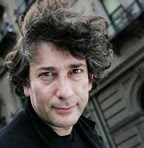
While its length is more indicative of a novella than a novel, The Ocean At The End Of The Lane by Neil Gaiman doesn't want for anything. The book is tightly drawn, brilliantly written, and imaginative without end.
Some might even say that the most fitting analogy is the pond behind Lettie Hempstock's house. It looks terribly small until you learn that it's an ocean. And like all oceans and the lands around them, it can very easily sweep someone away with it and most readers will be swept away.
The Ocean At The End Of The Lane is a story about a seven-year-old boy who is never named. He is a bookish little fellow without any real friends. Nobody even shows up for his birthday party except his younger sister and her friends (and they only came for cake).
We first meet him when he is 47, stumbling along the neighborhood of his youth. He is looking for something, trying to remember.
The narrator tunes into his memory like a transistor, connected but fuzzy.
As he wanders around his childhood stomping grounds, the narrator slowly regains bits and fuzzy pieces about what happened to him there. None of it is the stuff you might expect from most children. His memories are dreary, with the promise of something happier and fantastical just over the horizon.
Unfortunately for him, however, not all journeys past hedgerows lead to better places. Sometimes the fantastical only seems alluring to you for the first time, especially when accompanied by your first real friend. To everyone else, especially things that live in such places, it's your world that has an allure.
So when he and the presumably 11-year-old girl Lettie Hempstock enjoy a few adventures on the fringe of their world and the fringe of another, it isn't any surprise that someone or something might take an interest. What is a surprise, however, is how easily the woman (or flea) could hitch a ride.
It's so easy, in fact, that nobody even noticed until the woman had set her mind to work, granting wishes to make people happy without considering the consequences. If money was everything people wanted, then she would load them up. Never mind where or when it might materialize.
While that might sound more enchanting than fiendish, the narrator has a bigger problem on his hands. The thing they brought back with them isn't simply lurking around invisible. It has signed on to serve as the narrator and his sister's nanny. Sadder still, the cure might be harder to bear than the headache.
A few graphs about author Neil Gaiman, a master at adult fairy tales.
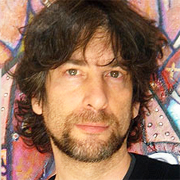
One of the more unique aspects of this sweet, sad, and spooky tale is that Gaiman borrowed significant portions from his own childhood. The family in the book is not his own family. As he puts it, he plundered only parts of his childhood and then literally reshaped them into a story.
The book began innocently enough after someone had asked him to write a short story. He eventually had to abandon the short as the story ballooned into a book that nobody was expecting. And perhaps this is what will make The Ocean At The End Of The Lane memorable for an author as seasoned as Gaiman.
The book itself carries an innocence that few writers can rediscover, let alone one who has written dozens of books and countless stories, ranging from comic books to films. Among his most notable works include comic book series The Sandman and novels Stardust, American Gods, and Coraline. The latter, incidentally, is probably the closest in tone to this new adventure.
The Ocean At The End Of The Lane Waves 8.8 On The Liquid Hip Richter Scale.
For the few who find the thinness troublesome, the counterpoint is clear enough. The story is precisely the length it needs to be, not one word too long or short. I wish more writers would show restraint. If they did, then this yarn might be their story and not one of Gaiman's finest.
You can find The Ocean at the End of the Lane: A Novel by Neil Gaiman on Amazon. You can also find the novel at Barnes & Noble or download it for iBooks. The audio version is especially memorable because Gaiman narrates it. There is something that stands out about that decision. While he has a warm, comforting voice that reads like a narrator (and not a character), the narrator is probably closer to being Gaiman than any other character he has ever brought to life.
Showing posts with label Neil Gaiman. Show all posts
Thursday, July 18, 2013
Friday, November 19, 2010
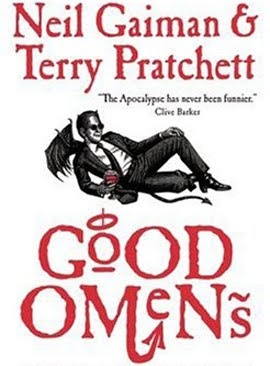
Good Omens By Gaiman And Pratchett Turns 20
"The difference between me and Neil [Gaiman] in our attitude to movie projects is that he doesn't believe they're going to happen until he's sitting in his seat eating popcorn, and I don't believe they're going to happen." — Terry Pratchett And so far, Pratchett has been right. Despite the right director, Terry Gilliam, Good Omens seems perpetually put on the back burner but is not dead. Even during interviews for his mesmerizing The Imaginarium of Doctor Parnassus, Gilliam said the prospect was still promising.
The primary hold up is finding someone willing to foot the bill. The secondary hold up is whether Hollywood will eventually concede that the end of the world can be funny. It has been for 20 years.
Good Omens: The Nice and Accurate Prophecies of Agnes Nutter, Witch is the funniest retelling of the end of the world, ever. It even comes with a disclaimer: Bringing about Armageddon can be dangerous. Do not attempt it in your own home.
But ironically, the book is less about the end of the world as it is about the unlikely duo and others who hope to stop it. After spending several thousand years on earth together, the demon Crowley and angel Aziraphale have developed an adversarial friendship. This friendship solidifies as the end of times begins, as neither one of them wants to give up their worldly assignments.
A quick, nice and accurate recap of Good Omens.
With the birth of the Antichrist, the angel and demon decide to nurture the child, exposing him to the balance of good and evil and believing free will might somehow circumvent the end of the world. They may have succeeded too. Except for one small problem. The boy they intended to influence was not the boy.
The real Antichrist, Adam Young, was growing up without the direct influences of good or evil. For all intents and purposes, he is a normal boy, perhaps a little brighter than most. And perhaps nothing would have changed had he not received a hell hound on his eleventh birthday, who he creatively names "Dog." That, and meeting with his neighbor, Anathema Device, the direct descendent Agnes Nutter, who predicted future events with such accuracy that her book of prophecies flopped on the heels of less accurate prophecies written by the likes of Nostradamus. When Anathema gives Adam a stack of tabloid magazines, everything he reads becomes real — including Elvis happily humming while he cooks hamburgers in a fast food restaurant.
Meanwhile, Pratchett and Gaiman introduce the colorful characters of The Four Horsemen of the Apocalypse. They include: Scarlett, a red-haired vixen and war reporter; Sable, a best-selling author of a diet book; Mr. White, who gleefully admires polluted creeks and oil tankers; and Death, a presence that is nowhere and everywhere all at once. What makes their introduction delightful, much like the effects of angels and devils, is the commentary attached to all our modern niceties.
They will eventually gather at a roadside cafe, before eventually heading out to meet the Antichrist at a nearby Air Force base. What they don't know is that Adam will not arrive alone. With him are his three lifelong friends: Pepper, Wennslydale, and Brian.
Likewise, Adam's vision of the end of the world has very little to do with biblical propositions. Instead, he would be content enough to abolish teachers and rules for children. Adam isn't the only one to express how his thinking might muck up the ineffability of any divine plan. Newton Pulsifer, a private in the Witchfinder Army, falls for Anathema, a self-proclaimed witch. And Witchfinder Sergeant Shadwell warms to physic Madame Tracy.
A brief, nice and accurate recap of the authors of Good Omens.
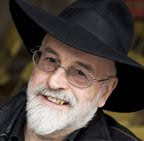
Neil Gaiman was originally a frequently rejected writer whose first published work was a throwaway biography of the band Duran Duran. He has since written dozens of bestsellers and comic series. Most recently, his books Stardust and Coraline were adapted into very imaginative and successful films. You can learn more about the author on his website. Terry Pratchett had his first short story published when he was thirteen, with the proceeds of the sale being used to buy his first typewriter. Still, Pratchett struggled as an author until developing the amazingly rich Discworld series as well as several other best-selling novels.
Last year, he was appointed a Knight Bachelor "for services to literature." He has also been a champion for Alzheimer's, suffering from the affliction since 2006 (see the video too). Visit his website.A few years ago, Pratchett added to the mythos of Good Omens by sharing New Year's resolutions by Crowley and Aziraphale. Crowley makes eight, including one to stop Googling himself. Aziraphale has eleven, including being nicer to Gabriel.
Good Omens Shows Us The Signs With 8.6 On The Liquid Hip Richter Scale.
While Good Omens is a novel that tells a story more than it shows one, there is no mistaking it is one of the greatest collaborations in two decades. Good Omens works on many levels, especially in its theme developed around the preconceptions of good and evil as well as how disasters can change people's lives, often for the better.
You can find Good Omens: The Nice and Accurate Prophecies of Agnes Nutter, Witch on Amazon. Good Omens was released last year as an audiobook, brilliantly read by Martin Jarvis.
Labels:
Books,
Good Omens,
Neil Gaiman,
Rich Becker,
Terry Pratchett,
William Morrow Co.
Subscribe to:
Posts (Atom)