When 30-year-old Ruby Bell returns to her hometown in East Texas, she unexpectedly resurrects all the ghosts and demons of her childhood. There, in Liberty, townsfolk cling to a sheltered social order and existence, the wounds of racism and slavery remain divisive and unhealed, and a small group of otherwise righteous men still sneak off into the woods to practice the darker arts of their ancestries.
Although considerably stronger than when she left, the confrontation of her past turns out to be too much for her. And as the memories come flooding back, Ruby is left incapable of distinguishing the fantasy from reality or the past from the present. No one is wiling to help her. If anything, the town seems poised to destroy her for having the audacity to escape to New York City in the 1950s.
There is one exception. Ephram Jennings still remembers Ruby as the young and beautiful girl who stole his heart. He alone becomes determined to protect her from a town that wants to destroy her.
Ruby is a love story stretched taut over a story of survival.
Ruby is not for the feint of heart as it rumbles along to tell a transfixing and cruel tale. Even if the primary protagonist is more Jennings than Ruby, the story belongs to her. Whereas he is the son of a backwoods preacher and seemingly the only person in the all-black town of Liberty to have retained a sense of naivety and nobility, she is the survivor of explicit and inhuman child abuse.
As a result, he is only one who is unwilling to shun Ruby, and is eventually compelled to save her despite placing himself at great risk. Most townsfolk see this newfound relationship as the work of the devil despite a seemingly endless parade of people who are anxious to exploit her abuse.
As the antagonists in the novel are larger than any one individual, Ruby and Ephram must face the torturous personal experiences of her past, the threats of physical and mental abuse in the present, and the ever-present essence of an ancient and destructive spiritual force that has set its sights on her soul. These three painful threads are then woven together so tightly that it is often difficult to feel where one ends and another begins.
For the most part, author Cynthia Bond tackles the difficult subject matter especially well. The novel is particularly powerful and devastating in that the victims aren't seen as worthy of being saved but rather deserve to be punished and exploited. In making it so, Bond captures the internal conflict that many survivors have a difficult time expressing and makes it real. It manifests itself in physical abuse, mental ignorance, and a spiritual battle between lost souls and the Dybou (devil).
Where the novel sometimes slips away is in its craft. While Bond is adept at developing well-drawn characters and has a flair for descriptive writing, she allows the exceedingly dark storyline to manage her. It plods along, making the same point over and over until the rhythm of it is circular and hollow.
A few more graphs about author Cynthia Bond.

There is an unmistakable authenticity that Cynthia Bond brings to her book. Her own history of abuse informed the novel as did meeting an amazing woman who had suffered unimaginable degrees of abuse during recovery. Later, Bond began to teach writing to homeless and at-risk youth throughout Los Angeles and discovered many survivors have the same or similar stories much like some family members have similar stories related to racism and the harshness of small town life.
Her mother inspired Liberty, having grown up in a small, all-black town in East Texas. And as Bond and her sister grew older, her mother would tell them stories that revolved around the scars of her body. They began to think of them as chapters.
Bond attended Northwestern University's Medill School of Journalism and then moved to New York and attended the American Academy of Dramatic Arts. She then founded the Blackbird Writing Collective in 2011 after becoming a PEN Rosenthal Fellow. At present, she teaches therapeutic writing at Paradigm Malibu Adolescent Treatment Center.
Ruby By Cynthia Bond Breaks 3.6 On The Liquid Hip Richter Scale.
While the novel is worth the read (despite its more explicit content), it's cumbersome in that Jennings is the only redeeming character and the primary protagonist in a story that doesn't belong to him. The mechanism might help us understand helplessness, but it doesn't necessarily endear Ruby to readers.
Ruby: A Novel by Cynthia Bond can be found on Amazon. The novel is also available for iBooks and can be downloaded as an audiobook on iTunes. Bond narrates her own novel.
Showing posts with label Crown Publishing Group. Show all posts
Friday, July 25, 2014
Thursday, May 23, 2013
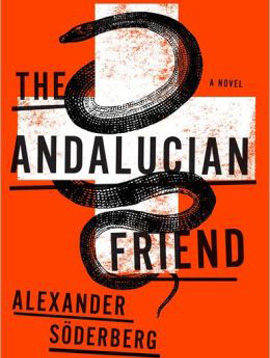
Soderberg Conjures Up A Crime Affair
Sophie Brinkmann was an unassuming single mother, almost lost within an uneventful life after being widowed. Except for her job and her son, there wasn't much left to tie her to the increasingly unfamiliar surroundings of Stockholm.
Even her home was beginning to look out of place amongst better kept suburban houses. All that would change quickly enough when she meets Hector Guzman. He has a certain charm about him and the pair make an immediate connection. But Brinkmann isn't the only one taking an interest.
Hector Guzman is the head of an international crime syndicate.
Although his operation extends across Europe and into South America, the syndicate's territory is under siege. Guzman is under surveillance by a rogue division of the Swedish police. Another syndicate is working to lay claim to what the Guzman family had built over the years. And as the book moves forward, Brinkmann's old boyfriend takes an interest in him too.
It doesn't take long before a parade of malcontent characters quickly spiral out of control and become almost daunting, with everyone looking to twist their fingers around the newest mark. Brinkmann's son, most agree, would make the perfect pawn if she could be won away from Guzman. And if she can't be won away, then perhaps she and her son might make the right better target.
While it would be easy to say that this makes for a big and bold story out of Stockholm, the truth is that is takes some work to lock down the expansive cast and characters and layered plots threads. At times, the more appropriate descriptor slips from complex to convoluted, leaving behind a collection of beautifully penciled scenes with memorable characters.
Part of it has to do with the way Alexander Söderberg backs into every character introduction, sometimes making it difficult to discern which one will play a bit role and which one is important. Söderberg tends to give them all equal weight and prods an urge to race ahead to find those characters who are more readily familiar — especially Brinkmann who is caught in the middle of it.
When this technique is added to the tight, often terse writing, it becomes clear that Söderberg sometimes plants so many details from multiple points of view that any sense of mystery materializes out of technique and not the story. It might even be that as memorable as many vignettes make The Andalucian Friend, it's almost impossible to grasp the big picture early on in the novel.
Söderberg does make up for it is in his portrayal of physically wounded, psychologically pressed, and morally deficient people. The volume of them all has a purpose too. Söderberg obviously plans from the beginning to close out his debut with a body count and the epic network of conflicting empires all crash down around each other.
A few graphs about Alexander Söderberg as a new voice for thrillers.
Although Söderberg was being propelled a bit by the recent successes of other Scandinavian authors, most comparisons that have been made along the way aren't necessarily valid. Söderberg has his own voice, especially in way it sometimes drifts with stream-of-consciousness details that resemble shot lists.
It makes sense that he would write this way. Söderberg worked as a television screenwriter for years before trying his hand at a novel. Interestingly enough, he never saw himself becoming a writer. Writing was just something he did for personal reasons, sometimes spending an entire evening at it.
After Publisher’s Weekly dubbed it the "book of the fair" at the 2011 Frankfurt Book Fair, foreign rights to the book and the forthcoming trilogy sparked a frenzied auction. The event marked a real boon for Söderberg, but one wonders whether the real win here will be some future screenplays.
The Andalucian Friend By Alexander Söderberg Hits 4.1 On The Liquid Hip Richter Scale.
Expect The Andalucian Friend to be a mixed affair for many readers, with the story better than the telling, the characters better than the composition, and shot lists sharper than the structure. But make no mistake, the book really shines when it shines. The Andalucian Friend is emotionally dazzling at times and deliciously grisly at others, even if some parts are stronger than the sum of it.
The Andalucian Friend: A Novel by Alexander Söderberg is available on Amazon. You can also find The Andalucian Friend at Barnes & Noble or download it for iBooks. The audiobook, narrated by Gildart Jackson, can be a bit of a challenge compared to the printed word. While Jackson reads the novel clearly enough, he doesn't have enough diversity in his pitch or tone to carry so many characters.
Even her home was beginning to look out of place amongst better kept suburban houses. All that would change quickly enough when she meets Hector Guzman. He has a certain charm about him and the pair make an immediate connection. But Brinkmann isn't the only one taking an interest.
Hector Guzman is the head of an international crime syndicate.
Although his operation extends across Europe and into South America, the syndicate's territory is under siege. Guzman is under surveillance by a rogue division of the Swedish police. Another syndicate is working to lay claim to what the Guzman family had built over the years. And as the book moves forward, Brinkmann's old boyfriend takes an interest in him too.
It doesn't take long before a parade of malcontent characters quickly spiral out of control and become almost daunting, with everyone looking to twist their fingers around the newest mark. Brinkmann's son, most agree, would make the perfect pawn if she could be won away from Guzman. And if she can't be won away, then perhaps she and her son might make the right better target.
While it would be easy to say that this makes for a big and bold story out of Stockholm, the truth is that is takes some work to lock down the expansive cast and characters and layered plots threads. At times, the more appropriate descriptor slips from complex to convoluted, leaving behind a collection of beautifully penciled scenes with memorable characters.Part of it has to do with the way Alexander Söderberg backs into every character introduction, sometimes making it difficult to discern which one will play a bit role and which one is important. Söderberg tends to give them all equal weight and prods an urge to race ahead to find those characters who are more readily familiar — especially Brinkmann who is caught in the middle of it.
When this technique is added to the tight, often terse writing, it becomes clear that Söderberg sometimes plants so many details from multiple points of view that any sense of mystery materializes out of technique and not the story. It might even be that as memorable as many vignettes make The Andalucian Friend, it's almost impossible to grasp the big picture early on in the novel.
Söderberg does make up for it is in his portrayal of physically wounded, psychologically pressed, and morally deficient people. The volume of them all has a purpose too. Söderberg obviously plans from the beginning to close out his debut with a body count and the epic network of conflicting empires all crash down around each other.
A few graphs about Alexander Söderberg as a new voice for thrillers.
Although Söderberg was being propelled a bit by the recent successes of other Scandinavian authors, most comparisons that have been made along the way aren't necessarily valid. Söderberg has his own voice, especially in way it sometimes drifts with stream-of-consciousness details that resemble shot lists.It makes sense that he would write this way. Söderberg worked as a television screenwriter for years before trying his hand at a novel. Interestingly enough, he never saw himself becoming a writer. Writing was just something he did for personal reasons, sometimes spending an entire evening at it.
After Publisher’s Weekly dubbed it the "book of the fair" at the 2011 Frankfurt Book Fair, foreign rights to the book and the forthcoming trilogy sparked a frenzied auction. The event marked a real boon for Söderberg, but one wonders whether the real win here will be some future screenplays.
The Andalucian Friend By Alexander Söderberg Hits 4.1 On The Liquid Hip Richter Scale.
Expect The Andalucian Friend to be a mixed affair for many readers, with the story better than the telling, the characters better than the composition, and shot lists sharper than the structure. But make no mistake, the book really shines when it shines. The Andalucian Friend is emotionally dazzling at times and deliciously grisly at others, even if some parts are stronger than the sum of it.
The Andalucian Friend: A Novel by Alexander Söderberg is available on Amazon. You can also find The Andalucian Friend at Barnes & Noble or download it for iBooks. The audiobook, narrated by Gildart Jackson, can be a bit of a challenge compared to the printed word. While Jackson reads the novel clearly enough, he doesn't have enough diversity in his pitch or tone to carry so many characters.
Friday, February 22, 2013
Gone Girl By Gillian Flynn Is Twisted
Every year without fail, Nick and Amy Dunne celebrate their wedding anniversary with an interesting romantic twist. Presents are wrapped. Reservations are made. And Amy, clever as she can be, creates a scavenger hunt that gives a nod to each and every highlight they experienced during the last twelve months — a trail of poems and places where the couple can remember each special rendezvous.
It's sweet and somewhat corny, but the couple mostly enjoy it. They might even enjoy it more if Amy didn't make the clues so obscure. There were plenty of times in their past that Nick couldn't guess what might have been deemed important that year, putting their entire evening in jeopardy, the game spoiled.
This year, however, would be different. Nick wouldn't be the one to spoil the game because on the warm summer morning of their fifth wedding anniversary, he received a curious phone call from his neighbor. The front door of his house is open and the always indoor cat is wandering around outside.
Amy Dunne has disappeared on the morning of their anniversary.
None of it really sinks in until Nick surveys the mess in the front room where the struggle had ensued. And then he does what any panicked husband might do. He immediately calls the area police, reporting the unthinkable — his wife might have been abducted. Correction. His famous wife has been abducted.
Amy is famous because her parents, two child psychologists, wrote an entire educational and semi-fictionalized series based on their only daughter's experiences. Then, in attempting to provide young women moral and ethical guidance, contrasted any number of distinctions between Amy's perfect choices and the less-than perfect choices of her peers.
Suffice to say, the insistent curiosity to transform a missing woman's case into entertainment is immediately heightened. And, much like any mysteries covered by the media, the husband survives only a day or two before being cast as an equally likely or perhaps primary suspect. In Nick's case, this holds especially true as he is caught either shell-shocked or smiling at the worst possible times.
The profile of a sociopath is picked carefully clean.
As their two stories unfold, Nick in the present and facing increased scrutiny, and Amy's a few month's prior via her secret diary, a different kind of story starts to emerge — a troubling tale about how two New York writers landed in North Carthage, Missouri, after the magazine market started to implode and Amy's parents had to raid their daughter's trust fund after riding their book series too hard for too long.
While the couple might have weathered another a year in New York, they are disappointed to discover that the home Amy's parents presented them with was never purchased. It was another mortgage they could no longer pay. This reason, in addition to the condition of Nick's ailing parents, convinced him to head back home to Missouri, with Amy somewhat grudgingly along for the ride.
Three things become especially apparent as author Gillian Flynn peels back each increasingly tense layer. The Dunnes didn't really have the storybook relationship that most people thought they had. The only person left that Nick can really count on is his twin sister Margo. And the profile of a sociopath can be difficult to spot when they have the wherewithal to bury their dark hearts under a mask of desirability.
A couple graphs about author Gillian Flynn.
Born to two community college professors in Kansas City, Missouri, Gillian Flynn was exposed to her parents' favorite subjects early — literature and film. Later, she would transition her early start into an English and journalism degree from the University of Kansas. It was at Northwestern University, where she earned her master's degree, that she decided against hard journalism.
Instead, she headed to New York City and landed a job with Entertainment Weekly as a critic. But despite her flair for film and television reviews, there was always something else lurking behind the scenes. Flynn was working on the novel Sharp Objects. Gone Girl is her third outlandish success.
Gone Girl By Gillian Flynn Twists At 8.1 On The Liquid Hip Richter Scale.
Most people who have piled on the decision to hate Girl Gone do it for the ending. It borders on inexplicable and comes across as nearly impossible. There are plenty of trappings tucked inside this psychological thriller but they don't make this story any less creepy or entertaining.
It's sweet and somewhat corny, but the couple mostly enjoy it. They might even enjoy it more if Amy didn't make the clues so obscure. There were plenty of times in their past that Nick couldn't guess what might have been deemed important that year, putting their entire evening in jeopardy, the game spoiled.
This year, however, would be different. Nick wouldn't be the one to spoil the game because on the warm summer morning of their fifth wedding anniversary, he received a curious phone call from his neighbor. The front door of his house is open and the always indoor cat is wandering around outside.
Amy Dunne has disappeared on the morning of their anniversary.
None of it really sinks in until Nick surveys the mess in the front room where the struggle had ensued. And then he does what any panicked husband might do. He immediately calls the area police, reporting the unthinkable — his wife might have been abducted. Correction. His famous wife has been abducted.
Amy is famous because her parents, two child psychologists, wrote an entire educational and semi-fictionalized series based on their only daughter's experiences. Then, in attempting to provide young women moral and ethical guidance, contrasted any number of distinctions between Amy's perfect choices and the less-than perfect choices of her peers.
Suffice to say, the insistent curiosity to transform a missing woman's case into entertainment is immediately heightened. And, much like any mysteries covered by the media, the husband survives only a day or two before being cast as an equally likely or perhaps primary suspect. In Nick's case, this holds especially true as he is caught either shell-shocked or smiling at the worst possible times.
The profile of a sociopath is picked carefully clean.
As their two stories unfold, Nick in the present and facing increased scrutiny, and Amy's a few month's prior via her secret diary, a different kind of story starts to emerge — a troubling tale about how two New York writers landed in North Carthage, Missouri, after the magazine market started to implode and Amy's parents had to raid their daughter's trust fund after riding their book series too hard for too long.
While the couple might have weathered another a year in New York, they are disappointed to discover that the home Amy's parents presented them with was never purchased. It was another mortgage they could no longer pay. This reason, in addition to the condition of Nick's ailing parents, convinced him to head back home to Missouri, with Amy somewhat grudgingly along for the ride.
Three things become especially apparent as author Gillian Flynn peels back each increasingly tense layer. The Dunnes didn't really have the storybook relationship that most people thought they had. The only person left that Nick can really count on is his twin sister Margo. And the profile of a sociopath can be difficult to spot when they have the wherewithal to bury their dark hearts under a mask of desirability.
A couple graphs about author Gillian Flynn.
Born to two community college professors in Kansas City, Missouri, Gillian Flynn was exposed to her parents' favorite subjects early — literature and film. Later, she would transition her early start into an English and journalism degree from the University of Kansas. It was at Northwestern University, where she earned her master's degree, that she decided against hard journalism.
Instead, she headed to New York City and landed a job with Entertainment Weekly as a critic. But despite her flair for film and television reviews, there was always something else lurking behind the scenes. Flynn was working on the novel Sharp Objects. Gone Girl is her third outlandish success.
Gone Girl By Gillian Flynn Twists At 8.1 On The Liquid Hip Richter Scale.
Most people who have piled on the decision to hate Girl Gone do it for the ending. It borders on inexplicable and comes across as nearly impossible. There are plenty of trappings tucked inside this psychological thriller but they don't make this story any less creepy or entertaining.
Capitalizing on the cultural fascination with missing persons crime scenes (enough to transform them into the closest thing to a television series), Flynn weaves a mesmerizing tale that makes two characters completely believable and unbelievable in the choices they make to sabotage what would have otherwise been a win-win marriage. That makes it work. Just know you might not like the ending.
Gone Girl: A Novel is available from Amazon or you can download it to iBooks. Barnes & Noble also carries the third novel by Gillian Flynn. You can find the audiobook on iTunes. It's delightfully and darkly done with two narrators, Julia Whelan and Kirby Heyborne. Their voices will keep you up at night.
Labels:
Books,
Crown Publishing Group,
Gillian Flynn,
Gone Girl,
Rich Becker
Subscribe to:
Posts (Atom)