Showing posts with label Arts. Show all posts

Monday, March 31, 2014

The Avant-Garde Vincent Van Gogh

Holland-born artist Vincent van Gogh may have become one of the most recognizable artists of his age, but it took several decades before his art would take a turn toward the avant-garde. It wasn't until his thirties that he would move to Paris and meet other disruptive artists like Paul Gauguin, Emile Bernard, and Henri de Toulouse-Lautrc (among others).

Before then, well into his late twenties, van Gogh worked as an art dealer with his uncle. And while he was initially happy and successful with the business of art, he unexpectedly lost interest in it. For him, the profession lacked the sense of purpose that he craved. So he turned to theology instead.

It didn't take long before he found it wasn't a good fit there either. Despite his enthusiasm as a missionary, he failed several program exams and felt his development as a preacher had stalled. Although he was successful as a missonary, the church rejected his practices to embrace poverty and live in the same impoverished squalor as the coal miners he served.

His empathy for the world around him became an art form. 

When van Gogh left the church embittered, he turned toward art as a remedy for his discouragement. He began simply by drawing the poverty around him. And while some historians see this shift as a rejection of faith, his art became central to religious expression and self-reformation.

He painted everyday life, with an aim toward capturing the human soul as he saw it in families barely getting by, a beggar in the street, a peasant girl who feels compassion for a distressed and underfed cow. From simple drawings, he expanded into paint and eventually enrolled in the Académie Royale des Beaux-Arts in Brussels.

His first major work, Potato Eaters, represents the cumulation of his work after five years. But despite how great his work would later be seen, the world had little interest then.

Van Gogh might have continued on like this if it wasn't for his brother. Theo van Gogh encouraged him to give up the dark, earthy tones of poverty and pay attention to the growing interest in Impressionism with its bright and vivd colors. The next year he would move to Paris.

It was in an art colony after Paris where he would make his famous works. 

His transformation in Paris was profound. He applied his paint thick. His brush strokes became big and bold. His approach was literal in that he painted everything around him. But it often sought to capture something else, an attempt to look behind the veil of his terrestrial journey.

It seems somewhat remarkable and yet impossible that van Gogh would only produce about 900 paintings over the course of ten years. Many of them were shown. Most received positive reviews. Almost none of them sold.

Even when he retreated with his friend Gauguin to an artist colony in Arles, his most productive and creative period was marred by his physical decline and mental illness. While some attribute his mental state to the work he produced, it may be related to his steadfast belief that he was nearing the end of his earthly journey. He frequently said he was compelled to paint but his utter surrender to the work would also aggravate his mental condition.

In the end, he chose to run toward the finality of existence rather than walk to it. Some might even speculate his early paintings suggest an old man might reach the stars was a only foreshadow to his later work, which shows the same idea from a dizzying and new point of view — his own.

The Work Of Van Gogh Bends Time At 9.9 On The Liquid Hip Richter Scale. 

It took neatly 20 years after his death that the world would rediscover what an artistic genius van Gogh had become. Most people who admired his work would never meet the man. He was never invited to attend his best shows. They were all held in memorial.

Today, his work is housed in museums all over the world. One of the most famous is the van Gogh Museum in Amsterdam, which has managed to assemble a permanent collection of more than 200 pieces. Another amazing site to visit is Vincent van Gogh - The Letters, which includes all of his letters to his brother and artist friends. It's an amazing collection that took more than 15 years of research. You can also find an impressive collection of van Gogh prints as part of the vintage wall art collection at Art.com

Wednesday, January 22, 2014

Wilson Inks An Impression On Music

When Wes Wilson first started designing rock posters, he didn't think twice about the deadlines or price. He just wanted to get the work done, making just enough money to afford the $30 rent he paid to stay at the Wentley Hotel in San Francisco. Several artists lived there.

It was one of them, his friend Kent Chapman, who eventually introduced Wilson to the owner of a small in-house commercial printing company. Together, they eventually took the company out of house. And it was there that Wilson made a symbolic political poster as a personal project.

When he took the infamous poster, which featured the stars and stripes of the American flag recast as a swastika, to an anti-war rally at Berkeley, reactions were mixed. Allen Ginsberg called it paranoid. The Anti-Defaminaton League thought it might be anti-Semitic. But is was promoter Chet Helms who saw something else.

He saw an emerging concert poster artist, even if Wilson considered drawing something that everyone in his family could do well. Helms went on to pay Wilson as little as $60 for short runs of 300 posters. Today, surviving posters such as Tribal Stomp sell for as much as $24,000.

Wes Wilson became the father of psychedelic rock posters. 

While psychedelic rock posters with freeform lettering became commonplace in the 1970s, Wilson had set the tone of them in motion in the 1960s. As he tells it today, serendipity interrupted all his plans and he began creating art for the masses, much of it inspired by Art Nouveau masters.

His work became so sought after that Bill Graham hired him the minute he saw one of the famous Open Theater posters. The two of them worked together for a spell until Graham realized Wilson was copyrighting his work. In the end, it was the contract that ended their friendship because the 6 percent royalty seemed fair to Graham until he realized he sold 100,000 posters.

In addition to those he sold, Graham used to accumulate and store material in newly minted condition, always having faith the posters would eventually be seen as works of art. That work, including the work of Wes Wilson, is now owned and managed by Wolfgang's Vault.

Some work, such as the Paul Butterfield Blues Band postcard, is listed for $20. Other work, such as the Sin Dance tour poster (featuring The Grass Roots, The Sons Of Adam, and Big Brother) lists for $1,900. Often the value is determined by the bands, art, and rarity.

A couple more graphs about artist Wes Wilson.

Wes Wilson was born in 1937 and a native of Sacramento, California. Interestingly enough, he was not interested in art as much as the nature and the outdoors. He studied forestry and horticulture at a small junior college in Auburn, California, until dropping out in 1963. His first poster was self-published two years later.

The timing was right in that an alternative culture was emerging and Wilson became caught up in it. The deeper he immersed himself in the work, the more he became inspired by great artists like Alphonse Mucha, Van Gogh, Gustav Klimt, and Egon Schiele and eventually Alfred Roller. The work progressed until finally reaching its height in 1966. He stopped working for Graham in 1967.

In 1968, Wilson was surprised to learn that he was to receive a $5,000 award by the National Endowment for the Arts for “his contributions to American Art.” The award recognized Wilson as a leader of the psychedelic poster scene, opening his work to be profiled in such major magazines as Life, Time, and Variety. In 1973, he and his family relocated to a cattle farm in the Missouri Ozarks.

The Art Of Wes Wilson Prints Up 9.1 On The Liquid Hip Richter Scale. 

The techniques that Wilson brought to the forefront still inspire poster artists today, filling the space with free lettering and beautiful repeating patterns. In addition to the vintage posters that helped define an era, Wilson produced some extraordinary watercolors and other original art that can be found on his site. They include posters for Graham, Family Dog, and others.

You can find some of his work for sale on his site. Conversely, many of the posters he designed for Graham and the Fillmore can be found at Wolfgang's Vault. Along with Wilson, the vault manages and sells posters, shirts, and photographs that were locked away by one of the most important promotors in San Francisco.

Tuesday, June 4, 2013

The Art League Is A Good Will Pick

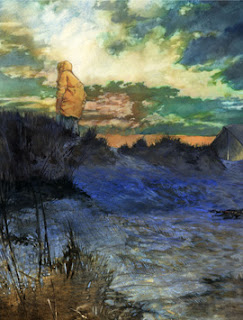
November Morning by Web Bryant
"By nurturing the artist, we enrich the community." — The Art League in Alexandria, Virginia

It's a statement that has been one of the guiding principles of The Art League, which has served the greater Washington D.C. metropolitan area since 1954. The league is a dynamic nonprofit organization, one that meets its mission through its gallery, fine arts school, art supply store, and arts outreach program.

Although recognized as one the best small charities in the greater Washington D. C. area, The Art League is much more. It is a model arts program, one of the best in the country. For more than 60 years, it has been responsible for providing a supportive arts environment where thousands of people have discovered, developed, and contributed to fine arts.

The Arts League has almost 60 years behind it. 

Originally founded by six female art students as The Art League of Northern Virginia, the group worked to foster art and art appreciation, sponsor lectures, encourage study, and hold exhibitions. As the organization grew, it eventually incorporated as a nonprofit and expanded to include the Washington D.C. area in 1967, shortly before playing a critical role in adapting the historic Torpedo Factory Art Center into artist studios owned by the City of Alexandria. Today, it is home to six galleries.

One of those galleries is managed and curated by The Art League, which provides a fellowship for more than 1,000 artists. Every month, member artists participate in juried exhibits that showcase original art by artists throughout Washington D.C. and the surrounding mid-Atlantic region.

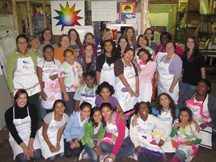
As amazing as it is, the gallery is only the beginning. Its school and outreach give artists an opportunity to write their own stories. Here is a visual sampling of those stories from artists and enthusiasts alike.


As the video illustrates, much of what makes The Art League unique is that it has grown to maintain a non-accredited arts school, open to all, providing instruction to nearly 7,000 students every year. The classes are taught by some of the most talented and well-known artists and instructors in the country.

The school also provides exhaustive outreach programs. The school hosts special skills-training programs for youth, hosts sponsored summer art camps for at-risk children, offers special IMPART programs for wounded warriors, and operates the award-winning SOHO (a Space of Her Own) art mentoring program that serves low-income preteen girls in Alexandria.

A little more about the breakthrough SOHO program.

SOHO, which was developed in collaboration with The Art League and the Alexandria Court Service Unit, provides a 16-week arts and life-skills program, concluding with the redecoration of the girls' bedrooms. It's there that these girls find a safe, stable environment to rediscover creativity and develop meaningful relationships.

SOHOGirls are each matched with a female adult volunteer mentor from the community and they meet weekly to participate in team-building activities, learn life skills lessons, eat a healthy dinner, and participate in an art lesson taught by a professional Art League artist. The curricula covers significant ground, which includes self-esteem, relationship building, and other life skills that might not develop anywhere else.

SOHO is offered completely free to its participants, and all mentors serve on a volunteer basis. The program depends entirely on the generosity of the individuals, foundations and companies that provide financial support to fund art lessons and projects, and the mentors and other volunteers who generously give their time, energy and skills to the program.

The Art League Is A Liquid Hip Good Will Pick.

At least once a month, Liquid Hip highlights good will efforts undertaken by people with big hearts. We don't score them. That belongs to you.

We chose The Art League because it provides a successful blueprint for nonprofit art organizations with dozens of elements that could be duplicated by other communities. It addresses art on every level, ranging from at-risk youth to working novice and professional artists in the area.

You can learn more about The Art League and its various programs by visiting its site. There are also a number of ways to help the program with a donation. The Art League also held a Razoo campaign that coincided with a community-wide, 24-hour fundraising program hosted by Act for Alexandria. Programs that raise the most money within 24 hours in April are awarded additional funds and grants.